
Retaining RNs: How to boost their morale and reduce turnover
Nurse turnover is the rate at which registered nurses leave the current workforce of a facility. A higher nurse turnover rate indicates dissatisfaction among the nursing staff regarding the work environment, culture, and team dynamics, highlighting the need for effective nurse retention strategies at your facility.
According to the US Bureau of Labor Statistics, around 194,500 registered nurse job openings are projected each year over the next decade, as demand for nurses increases due to higher nurse turnover. The Health Workforce Analysis Report states that there is a projected shortage of 78,610 across the USA.
Understanding the nurse turnover rate and the reasons for turnover is important to take necessary actions to improve rn retention strategies.
The primary cause of nurse turnover is staff burnout driven by heavy workloads resulting from a staffing gap in meeting rising patient demand. According to a report by the Journal of Nursing Regulation, around 25.8% of registered nurses experience burnout from their daily work, which causes RN in the US to leave their profession.
How nurse turnover can affect the facility’s operational efficiency and patient care
Nurse turnover can impose considerable costs on facilities, as they must fill healthcare staffing gaps by hiring new registered nurses. The cost of turnover in healthcare is primarily driven by recruiting and onboarding new candidates.
Moreover, compliance checks, onboarding, and scheduling training programs for new hires create a substantial administrative workload for the facility, highlighting the need for effective rn retention strategies at your clinic.
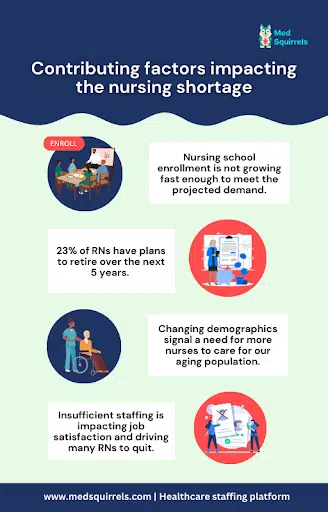
Though enrollment in entry-level baccalaureate programs in nursing increased by 0.3% in 2023, AACN did report drops in both PhD and master’s nursing programs by 3.1% and 0.9%, respectively.
These trends are raising concerns about the capacity of nursing schools to meet the projected demand for nursing services, including the need for more nurse faculty, researchers, and primary care providers.
Source: Journal of Nursing Regulation
According to a study published by the National Institutes of Health, the Registered Nurse turnover is recorded at 18%.
Clearly, there is a shortage of registered nurses in the USA, which increases the workload for existing staff at the facility, leading to burnout.
Staff shortages can lead to improper scheduling and extended shifts, creating operational strain across healthcare facilities. This not only incurs significant overtime costs for the facility but can also affect the quality of patient care, as overworked staff tend to make more errors, risking patient safety. Eventually, high turnover in healthcare facilities can damage your reputation and create hurdles when you want to hire registered nurses.
Factors driving the high nurse turnover rate
Before diving deeper into strategies to retain the current registered nurse workforce at your facility, it is important to understand the underlying causes of the increased RN turnover rate. Registered nurses play a critical role in the healthcare sector and constitute a major proportion of the total healthcare workforce in the USA.
According to the National Center for Health Workforce Analysis report, there were 4 million active RNs across the USA. However, their demand is increasing year over year due to high nurse turnover.
The most prevalent challenge discussed across the healthcare sector is nurse burnout. The COVID-19 pandemic has led to a significant increase in burnout among nurses due to long hours, extended shifts, and stressful work conditions.
This led some to retire early and others to change professions, resulting in mass attrition in the healthcare sector. The Nursing Workforce Fact sheet states that most registered nurses are aged around 46 years, and more than a quarter have reported plans to leave the workforce in the next five years.
Yet another contributing factor to the RN turnover rate is inadequate compensation for registered nurses. In cases where contract nurses are hired through a staffing agency, the healthcare facility usually imposes high markups.
A significant portion of the registered nurses’ bill rate will be markup fees, which can lead to underpaid staff. Other contributing factors to nurse turnover include limited career development opportunities, poor work-life balance, and a toxic work environment.
The rising demand for RNs in Washington
According to the nursing workforce projections factsheet, Washington has the largest projected shortage of registered nurses by 2035, with over 1 million people leaving the workforce in the next 10 years. The Washington State Center for Nursing has published a detailed report that highlights the demand-supply gap for registered nurses in Washington state.
The shortage is driven by factors such as non-renewal of existing licenses, the transfer of nurses to different occupations, underscoring the importance of effective nurse burnout solutions to retain experienced staff. Additionally, there hasn’t been a significant increase in the graduation rate of registered nurses from nursing schools. All these issues, combined with an aging population, have created a rising demand for registered nurses in Washington. Implementing effective nurse retention strategies can help keep experienced nurses in the workforce and partially ease the growing shortage.
Projected supply and demand for registered nurses and other roles in 2025 & 2030
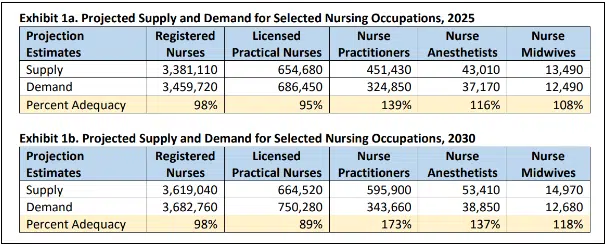
Source:National Center for Health Workforce Analysis
Healthcare staff retention strategies to reduce nurse turnover
Properly addressing the factors behind nurse turnover can help you retain staff and hire RNs more efficiently. Conducting exit interviews and analyzing nurse burnout statistics can reveal the main pressures causing nurses to leave.
Implementing effective nurse retention strategies, including collecting timely feedback from the current workforce to identify areas for improvement, can further help prevent turnover.
Likewise, here are some healthcare staff retention strategies you can implement in advance to reduce staff turnover at your facility.
- Ensure there are adequate registered nurses in each department of your facility to mitigate the risk of having overworked staff.
- Provide flexible shift options to hire registered nurses to improve job satisfaction.
- Offer competitive compensation to the registered nurses to attract and retain them. Also, ensure to revise the compensation at regular intervals to stay on top of the staffing market.
- Along with salary, offer a comprehensive compensation package that includes additional perks such as paid time off, adequate health insurance, and retirement plans.
- Provide opportunities for career development by supporting registered nurses in obtaining specialized certifications and offering training to build skills.
- Set a clear career progression pathway and communicate the performance evaluation criteria to employees to ensure fair progression.
- Establish mentorship and various training programs to equip the newly hired registered nurses to work alongside your current staff. Mentorship programs can be hugely beneficial when you hire newly graduated registered nurses. This can reduce errors.
- Provide cross-training opportunities for registered nurses at your facility. While cross-training helps registered nurses update their skill sets, it makes their jobs more exciting and novel.
- Have a mechanism to regularly collect feedback from your existing staff. Make sure everyone feels safe voicing their views.
- Promote a diverse and inclusive workforce in which everyone, including registered nurses and other allied healthcare professionals, has a sense of belonging.
- While hiring registered nurses, check whether they are culturally fit for your facility. Culture-fit candidates are found to stay longer in a facility.
- Build a strong employer brand to make it easier to attract top talent to your facility.
Leveraging staffing agencies to create competitive compensation and benefits
To create a comprehensive compensation structure for recruiting RNs, healthcare facilities need to understand how to meet staffing needs. These help devise strategies to attract skilled registered nurses to your facility and implement effective nurse retention strategies through competitive pay and benefits.
They can streamline the overall RN hiring process and help frame attractive benefits packages for your staff. However, proper care is needed when working with registered nurse staffing solutions to ensure you are on the right track
To hire registered nurses, these staffing agencies charge high markup fees, leading to higher bill rates, which can force you to spend above your budget.
Here are some things to consider while associating with a registered nurse staffing solutions provider.
- Ensure that the staffing agency has a good reputation and experience in the registered nurse staffing industry.
- Verify the terms and conditions listed in the contract to hire registered nurses.
- Ensure you get complete transparency into each stage of the recruitment and onboarding process.
- Be clear about the pricing model and the markup fees your facility levies.
- Prefer staffing agencies that leverage technology to simplify the recruitment process, and this can limit errors in the compliance process.
- Ensure you get proper support and guidance throughout your collaboration with the staffing agency.
Cost-effective RN staffing with an AI-powered platform
MedSquirrels is a healthcare staffing solutions platform that leverages technologies such as AI and automation to streamline the entire RN recruitment process. With reduced human intervention, we ensure that our process to hire registered nurses is error-free and cost-effective.
Unlike other traditional agencies, we do not charge markup fees for hiring a registered nurse. This helps you address healthcare staffing challenges.
MedSquirrels also provides complete transparency in our pricing by charging only a flat license fee for using our platform, plus the payroll costs of the registered nurses we hire.
MedSquirrels also offers affordable plans. They are designed to help you fulfill your contractual or full-time RN resource in your budget. Our platform uses a flat-fee pricing model in which you pay only the resource’s monthly payroll cost and an hourly fee.
For more details on our plans to hire registered nurses, recruiters can book a demo today. Healthcare professionals can also check open jobs and apply for those that match their skills.
FAQs
What are the main causes of nurse turnover?
The primary causes include staff burnout due to heavy workloads, inadequate compensation, limited career growth opportunities, poor work-life balance, and toxic work environments. Understanding these factors helps facilities implement targeted retention strategies.
How does high nurse turnover affect operational efficiency and patient care?
High turnover disrupts workflows, increases administrative burdens, and forces overtime, which can lead to errors and lower-quality care. Retaining experienced nurses improves team stability and ensures consistent patient outcomes.
What are some practical ways to prevent nurse burnout in healthcare facilities?
Practical solutions include offering flexible scheduling, providing mental health support, ensuring adequate staffing levels, encouraging regular breaks, and fostering a supportive work culture. Using these nurse burnout solutions can improve staff satisfaction and reduce turnover.
How can MedSquirrels help facilities overcome healthcare staffing challenges?
MedSquirrels uses AI and automation to streamline RN recruitment, reduce mismatch errors, and efficiently fill staffing gaps, ensuring facilities can maintain a skilled nursing workforce without delays.
Can MedSquirrels support both full-time and contractual RN staffing needs?
Yes, MedSquirrels provides flexible plans that accommodate both full-time and contractual RN requirements, helping facilities meet fluctuating staffing demands efficiently.

Jani Basha is a Content Specialist with a background in healthcare content development, recruitment, and workforce management. His work focuses on the challenges healthcare facilities face in attracting, staffing, and managing clinical and non-clinical professionals. He develops content on healthcare recruitment, workforce trends, and staffing strategies. His work translates complex workforce topics into practical insights for healthcare recruiters. His work aligns with MedSquirrels’ mission to make healthcare staffing more efficient and cost-effective through technology-driven workforce solutions.