
Pharmacy technician shortages: How to fill roles without delays

The ongoing pharmacy technician shortage is placing immense pressure on healthcare facilities across the U.S. These include hospitals, urgent care centers, retail pharmacies, and long-term care institutions.
With patient demand on the rise, many pharmacists are shifting toward more clinical roles. As a result, pharmacy technicians have become essential to daily operations.
Many recruiters like you are facing challenges to fill pharmacy technician positions because of growing demand. These hiring challenges can affect daily operations and patient care delivery.
So, how can you address these staffing gaps and fill open positions without delays?
This blog explains the key drivers of the shortage. It also gives staffing solutions and practical strategies to fill roles quickly.
Whether you are experiencing increased workloads or aiming to stabilize your workforce in the long term, these strategies can help you address your staffing needs.
Understanding the impact of pharmacy technician shortages
While filling healthcare roles as a recruiter, it will be your responsibility to know about the requirements in your facility.
If you are planning to hire pharmacy technicians, you need to understand the shortage, as it goes beyond open job requisitions.
This shortage disrupts patient care and increases medication errors. These disruptions also lead to a sharp rise in pharmacy technician burnout and turnover.
Consequences of unfilled pharmacy technician roles include:
- Longer wait times for prescriptions and patient counseling are causing patient dissatisfaction.
- Pharmacists take on administrative or non-clinical tasks, which reduces their capacity to provide direct patient care.
- Lower operational efficiency during high-demand periods, such as flu season or public health emergencies.
When these gaps grow, they can lead to reduced service quality and prompt many recruiters to rethink their staffing approach.
Recruiters like you must understand that the shortages are not always caused by external demand.
They can also start from internal oversights, such as poor cultural fit between pharmacy technicians and the facility.
When workplace values, communication styles, or expectations do not align, it can lead to low retention, reduced job satisfaction, and poor team performance.
To overcome this, you need to understand the importance of cultural fit in the pharmacy technician recruiting process.
Pharmacy technician shortages and impact on services
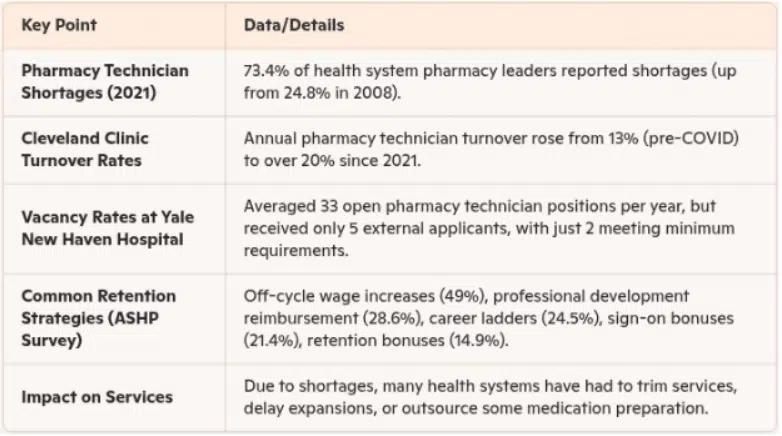
Key Points | Data/Details |
Pharmacy Technician Shortages | 73.4% of health system pharmacy leaders reported shortages |
Cleveland Clinic Turnover Rates | Annual pharmacy technician turnover rose from 13% (pre-COVID) to over 20% |
Vacancy Rates at Yale New Haven Hospital | Averaged 33 open pharmacy technician positions per year, but received only 5 external applicants, with just 2 meeting minimum requirements |
Common Retention Strategies (ASHP Survey) | Off-cycle wage increases (49%), professional development reimbursement (28.6%), career ladders (24.5%), sign-on bonuses (21.4%), retention bonuses (14.9%) |
Impact on Services | Due to shortages, many health systems have had to trim services, delay expansions, or outsource some medication preparation |
Source: www.academic.oup.com
Use data to forecast and fill demand
The most essential factor to follow while recruiting is to maintain a detailed plan related to staffing.
Having a plan for your pharmacy technician staffing in advance can help you avoid last-minute hiring challenges.
To maintain a plan, you need to maintain workforce data from your internal scheduling systems. This data can provide information about staff availability around busy periods.
This approach helps you prepare for staffing needs in advance and manage your pharmacy technician workforce more effectively.
Key metrics to track include:
- You need to track how many prescriptions each technician handles to understand whether your pharmacy has enough staff.
- Maintain data about absenteeism to identify staffing gaps before they affect your operations.
- Watch for increases in patient visits and prescriptions during allergy season, so you can plan your staffing needs.
With the right planning, you can adopt a predictive staffing model that prevents disruption.
Invest in technician retention and upskilling
One of the most overlooked strategies for overcoming pharmacy technician burnout is investing in your existing workforce.
Instead of planning to hire pharmacy technicians, you can focus on retention by offering comprehensive salary support, recognition, and growth opportunities.
Effective retention strategies to consider:
- Provide continuing education and certification reimbursement.
- Practice leadership development programs for senior techs.
- Use flexible work scheduling to overcome stress.
These efforts improve employee satisfaction and allow them to work for more time with your clinic.
As a recruiter, you need to know that retention should be a core part of your hiring strategy, not an afterthought.
Creating a pharmacy tech contingency staffing plan
Facility owners must understand that patient demand and staffing needs can change at any time.
So it is essential to maintain staffing plans that help your pharmacy manage these demands without disrupting daily operations.
Recruiters like you can also consider partnering with a trusted pharmacy tech staffing platform. This partnership will help you build a pool of talent that can help you fill unexpected staffing gaps.
What to include in your contingency staffing plan:
- List of pre-vetted profiles who can provide quality care.
- A group of trained part-time or cross-trained technicians who can step in during busy periods or staff shortages.
- Simple onboarding processes and quick credential checks to reduce staffing delays.
Following these points will help you build a staffing strategy which helps to maintain quality workforce and maintain quality care.
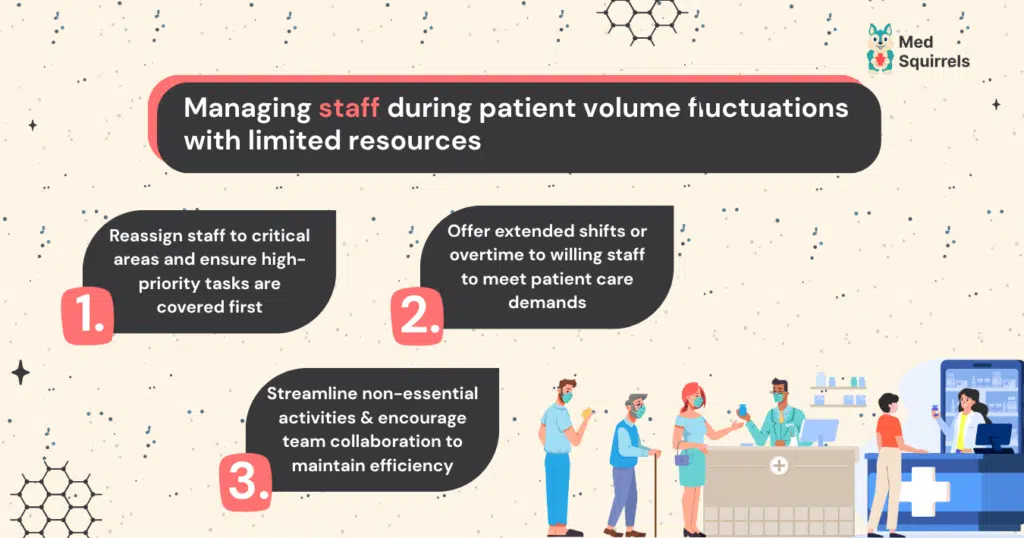
The infographic below offers a detailed overview of strategies to help facilities maintain care quality despite staffing and resource constraints.
Pharmacy technician shortages and impact on services
Source: www.academic.oup.com
Use data to forecast and fill demand
Anticipating technician needs before a crisis hits is key to avoiding the worst effects of the pharmacy technician shortage. By leveraging workforce analytics, including data from internal scheduling systems, you can proactively plan staffing around known peaks, such as flu season, local vaccination drives, or regulatory deadlines. This approach helps align resources in advance with your pharmacy tech staffing strategy.
Key metrics to track include:
- Average technician-to-prescription fill ratios help determine how many technicians are required per patient volume to maintain service quality.
- Turnover rates and absenteeism trends reveal when and why staffing gaps are forming, so you can prepare in advance.
- Seasonal surges in patient or prescription volume, such as during allergy season, back-to-school vaccine periods, or holiday demand spikes
With the right tools, healthcare organizations can adopt a predictive hiring model that prevents disruption, even as workloads fluctuate. Proactive planning transforms staffing from a reactive burden into a strategic advantage.
Invest in technician retention and upskilling
One of the most overlooked strategies for overcoming pharmacy technician burnout and reducing vacancies is investing in your existing workforce. Instead of planning to hire pharmacy technicians, you can focus on retention by offering support, recognition, and growth opportunities.
Effective retention strategies to consider:
- Continuing education and certification reimbursement
- Leadership development programs for senior techs
- Flexible scheduling and mental health resources
These efforts improve morale and reduce reliance on emergency staffing fixes, all while promoting career advancement within your facility. Retention should be a core part of your hiring strategy, not an afterthought.
Creating a pharmacy tech contingency staffing plan
In a world of fluctuating demand and persistent healthcare staffing shortages, having a solid contingency plan is essential. Creating partnerships with a trusted pharmacy tech staffing platform and building internal float pools ensures you are never caught off guard.
What to include in your contingency staffing plan:
- Standby agreements with pre-vetted staffing partners who can supply qualified pharmacy technicians on short notice.
- A bench of trained part-time or cross-functional internal technicians ready to step in during peak times or staff shortages.
- Emergency onboarding workflows and rapid credentialing protocols to reduce time-to-hire and ensure compliance under pressure.
This level of preparedness helps protect patient care continuity, even during peak demand or sudden absences. While contingency plans are essential for addressing urgent staffing gaps, long-term resilience comes from proactive workforce planning.
Explore our blog on building a long-term hiring strategy for pharmacy technicians to discover how future-focused planning can reduce dependency on emergency staffing and strengthen your talent pipeline. The infographic below offers a detailed overview of strategies to help facilities maintain care quality despite staffing and resource constraints.
Balancing workforce capacity with patient demand
Leverage specialized pharmacy tech staffing platforms
Working with a pharmacy tech staffing platform is one of the most effective ways to hire a pharmacy technician in this competitive staffing world.
These platforms maintain pools of experienced pharmacy techs and are well-versed in handling urgent and complex staffing needs. Their expertise streamlines everything from vetting to onboarding.
Advantages of partnering with a pharmacy tech staffing platform include:
- Quick access to certified and licensed pharmacy technicians
- Temporary-to-permanent placements for long-term fit
- Support for rural or underserved facilities facing acute healthcare staffing shortages
These advantages help your staffing process to be more efficient.
MedSquirrels offers cost-effective plans to solve your pharmacy tech staffing needs
Addressing the pharmacy technician shortage starts with eliminating hiring delays. This requires a smarter and more efficient staffing strategy.
To do this, you need a clear understanding of your pharmacy’s operational workflow and compliance requirements.
However, this process can be time-consuming. It involves credentialing and onboarding. To simplify recruitment, partner with a technology-enabled pharmacy tech staffing platform such as MedSquirrels.
With MedSquirrels, you receive pre-vetted resumes within 2–5 business days. This helps you address staffing shortages and minimize operational disruptions.
MedSquirrels also assists you with onboarding both clinicians and non-clinicians.
Along with these benefits, MedSquirrels offers affordable plans that help you reduce costs compared to traditional pharmacy tech staffing agencies.
Whether you need urgent coverage or want to expand your workforce over time, MedSquirrels offers staffing solutions to keep your operations running smoothly.
You can book a free demo to see how our platform fills vital roles for your facility without delays.
FAQs
What is causing the pharmacy technician shortage in the U.S.?
The pharmacy technician shortage is driven by rising patient demand, increased workloads, and high employee turnover. These factors make it harder to fill open positions on time.
How do pharmacy technician shortages affect patient care?
Staff shortages can increase prescription wait times and delay medication services. They also add to pharmacists’ workloads because pharmacists must handle more administrative tasks. This leaves them with less time for direct patient care.
What qualifications should recruiters check when hiring pharmacy technicians?
Recruiters should verify the candidate’s certification or license, where required by state law. They should also review relevant work experience, technical skills, and knowledge of pharmacy operations. Communication skills and attention to detail are also important.
How can MedSquirrels help me fill pharmacy technician roles quickly?
MedSquirrel’s AI-enabled platform matches your requirements and submits profiles of pharmacy techs for review within 2–5 business days.
Is MedSquirrels cost-effective compared to traditional agencies?
Yes, MedSquirrels operates on a flat-fee model, significantly reducing your staffing costs compared to traditional agencies that charge high percentage-based markups.

Jani Basha is a Content Specialist with a background in healthcare content development, recruitment, and workforce management. His work focuses on the challenges healthcare facilities face in attracting, staffing, and managing clinical and non-clinical professionals. He develops content on healthcare recruitment, workforce trends, and staffing strategies. His work translates complex workforce topics into practical insights for healthcare recruiters. His work aligns with MedSquirrels’ mission to make healthcare staffing more efficient and cost-effective through technology-driven workforce solutions.