
MRI vs ultrasound technicians: Staffing challenges faced by facilities
Diagnostic imaging plays a vital role in modern healthcare, and understanding the differences between MRI tech vs ultrasound tech roles has become increasingly vital for facilities planning imaging services. These professionals enable clinicians to view internal structures and support timely, non-invasive diagnoses without exposing patients to ionizing radiation.
Magnetic resonance imaging (MRI) and ultrasound are two widely used imaging modalities that provide detailed diagnostic insights across a range of clinical settings. As demand for imaging continues to grow, facilities are facing greater pressure to recruit and retain qualified MRI and ultrasound technicians to meet patient volume and operational needs.
Both methods serve distinct but complementary purposes across hospitals, outpatient centers, and specialty clinics. So by knowing the difference and comparison facilities can make effective MRI vs ultrasound tech staffing decisions essential for maintaining diagnostic capacity and care continuity.
Key staffing challenges with MRI and ultrasound technicians
Facilities increasingly face pressure to maintain imaging coverage while navigating workforce limitations and operational complexity. Gaps in the workforce coverage can directly affect diagnostic turnaround times and increase the patient waiting list.
Understanding these challenges early helps facilities make informed workforce decisions and reduce disruption across imaging services. The top challenges are explained below.
Also read: Healthcare staffing compliance: overcoming key challenges
Increasing demand outpacing workforce supply
The need for imaging specialists continues to expand in the USA. According to employment projections, ultrasound technician staffing demand is expected to grow significantly over the next decade, driven by increasing procedural volumes and ongoing workforce turnover.
In many regions, workforce availability has not kept pace with demand, making hiring increasingly competitive. This imbalance can drive up wage expectations and extend time-to-fill metrics, particularly in high-volume imaging environments. Facilities experiencing rapid service growth often encounter sustained pressure related to MRI technician staffing needs.
Skill-specific training requirements
MRI technologists must master the use of magnetic resonance systems and understand image production, signal optimization, and safety protocols. On the other hand, ultrasound technicians, often called sonographers, must skillfully apply high-frequency sound wave technology across multiple body systems, adapting techniques based on patient condition and diagnostic requirements.
They are also responsible for capturing accurate images in real time while ensuring patient comfort and procedural accuracy. Both fields require robust clinical training and sound decision-making skills that cannot be developed without structured education and hands-on experience, which directly impacts MRI vs ultrasound certification requirements.
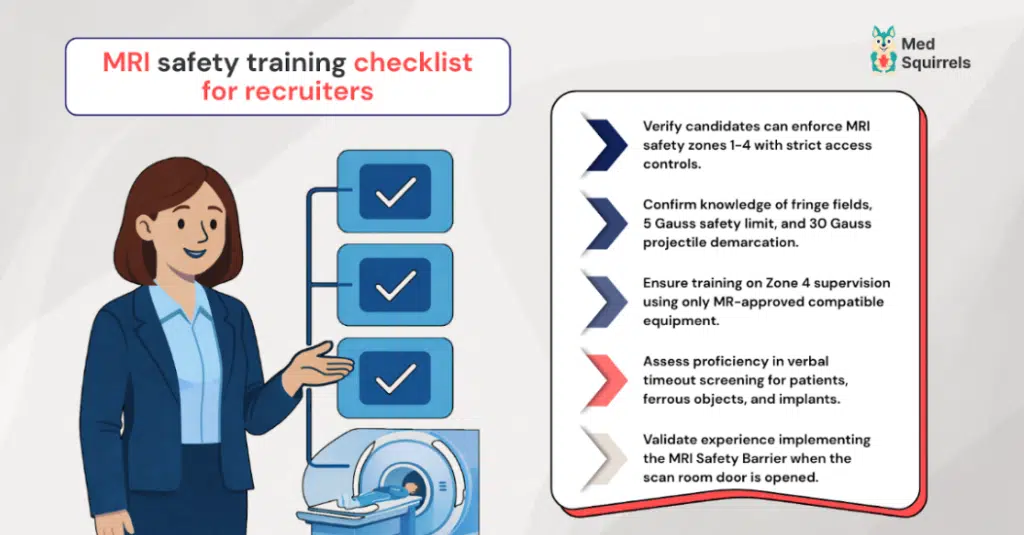
When facilities plan to hire MRI technologists, they must verify that candidates are trained and clinically qualified to operate advanced imaging equipment safely. To support informed decisions, a detailed infographic outlining related training expectations for MRI technicians has been added to help clarify the practical differences between MRI and ultrasound roles.
MRI safety training checklist for recruiters
Competition for qualified candidates
Because MRI and ultrasound are both considered safer, radiation-free imaging methods and are increasingly preferred by clinicians, facilities compete for the same limited pool of trained technologists and sonographers. MRI technician staffing shortages are becoming more pronounced as imaging demand continues to rise nationwide.
Facilities continue to balance patient scheduling and resource allocation while expanding imaging capacity. This growth also contributes to ultrasound technician staffing shortages across many regions, particularly in high-volume care settings.
Credentialing and clinical experience
MRI technician staffing remains a critical consideration when ensuring staff meet credential requirements and have adequate clinical experience. Effective imaging programs require professionals who not only understand modality principles but also operate equipment reliably and communicate results to care teams.
Challenges related to ultrasound technician staffing often increase expenses and delay decision-making when imaging departments need to scale quickly or secure urgent coverage while they hire ultrasound technologists. This is especially true for facilities balancing high diagnostic demand across multiple imaging modalities.
Operational implications for healthcare facilities
Facilitating high-quality imaging services requires more than just filling open positions; facilities must consider workflow integration, cross-department collaboration, and long-term retention strategies.
MRI vs ultrasound staffing costs are a growing concern for healthcare facilities as imaging demand continues to rise. Imaging departments are central to patient diagnosis and treatment planning, and shortages can create procedural bottlenecks, longer wait times, and potential declines in care quality.
Facilities must develop plans that account for:
- Plan and maintain training and development pipelines
- Competitive compensation structures
- Credential verification and continuing education
- Choosing to hire a contract or full-time staff member.
Providing a competitive salary is essential to attract qualified imaging professionals within shorter timelines, and staying informed about current compensation trends is equally crucial to overcome salary-related challenges and maintain workforce stability.
A detailed infographic is provided to support recruiters like you for a better understanding of current salary benchmarks and compensation considerations for MRI tech vs ultrasound tech roles.
MRI technologists vs. ultrasound technicians' wages comparison by state
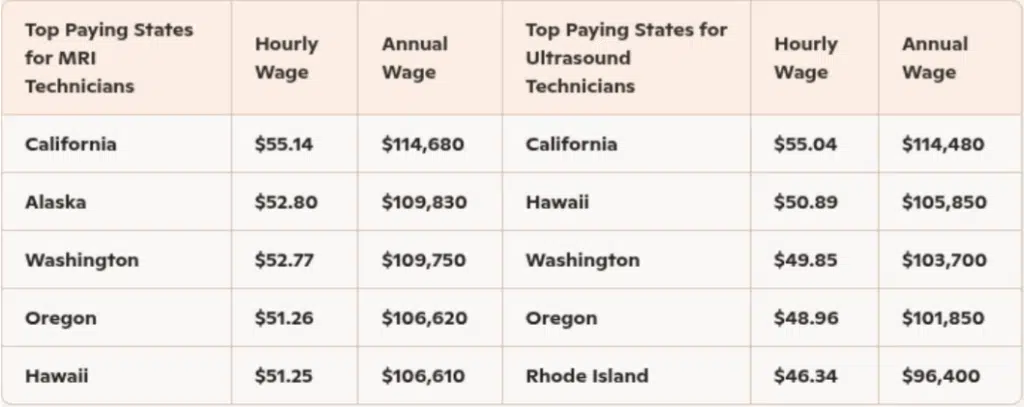
Source: www.bls.gov
Also read: Temporary vs. full-time healthcare staffing: Which option should a facility choose?
Choosing the right partner for facilities growth
While staffing MRI technicians and ultrasound technicians, facilities, and recruiters like you must be aware of the key factors that influence their ability to hire on time. Increasing demand for diagnostic imaging, a limited supply of trained professionals, and modality-specific skill requirements often extend time-to-fill and place pressure on imaging operations.
Identifying these challenges early, while you hire ultrasound techs and MRI techs, enables facilities to plan proactively and minimize service disruptions caused by workforce gaps highlighted in MRI technologist vs. ultrasound technologist comparisons. To mitigate these challenges, facilities should carefully evaluate how they source talent and consider moving away from traditional agencies.
These agencies often come with percentage-based markups, provide limited cost transparency, and offer less flexibility. These factors can increase expenses and delay decisions when imaging departments need to scale quickly or secure urgent coverage, particularly when balancing MRI and ultrasound technician staffing requirements.
To overcome these hurdles, facilities benefit from partnering with a modern platform like MedSquirrels. This platform delivers affordable and transparent plans aligned with your team’s operational needs. With MedSquirrels, facilities can choose to hire with plans such as:
Orange Plan, which provides full-service, end-to-end support, including sourcing, onboarding, payroll, and liability protection.
Purple Plan, which supports facilities that already have a preferred candidate but need assistance with credentialing, HR compliance, and onboarding, allowing them to stay in control while reducing administrative burden.
Blue Plan, which leverages AI-driven recruitment to attract qualified MRI and ultrasound professionals more efficiently for hard-to-fill roles.
By selecting a platform built for efficiency and transparency, facilities can respond faster to imaging demand, reduce administrative workload, and maintain continuity of diagnostic services while supporting long-term workforce stability across MRI tech vs ultrasound tech staffing needs.
Facilities and recruiters like you can book a free demo today to see how our platform supports smarter, faster decisions. Healthcare professionals can browse open jobs and apply for those jobs that fit with their professional goals.
FAQs
Why is imaging workforce planning becoming more complex for healthcare facilities?
Imaging departments face rising patient volumes, expanding service lines, and stricter compliance requirements. These factors increase pressure to maintain adequate coverage while controlling operational costs and ensuring diagnostic quality.
What factors should facilities consider when planning imaging staff coverage?
Facilities should assess procedure volume, modality mix, peak usage periods, credential requirements, and long-term service growth. Strategic planning helps avoid hurdles.
How should facilities evaluate imaging roles during workforce planning?
Facilities should understand the scope of practice, supervision requirements, and operational impact when comparing roles such as MRI tech vs ultrasound tech to align with service needs.
What types of facilities can benefit from using MedSquirrels?
MedSquirrels supports hospitals, outpatient clinics, diagnostic centers, long-term care facilities, and specialty practices. Its affordable plans enable facilities and clinics of various sizes to adapt according to their workload and service demand.
How does MedSquirrels help reduce staffing costs?
By eliminating percentage-based markups and offering affordable plans, MedSquirrels enables facilities to control expenses better. This approach allows more of the bill rate to go directly to clinicians while maintaining predictable budgets.

Suresh writes about healthcare staffing and industry insights for MedSquirrels, helping professionals and facilities navigate hiring needs.