
Medical assistant vs. CNA: choosing the proper support for your facility
With the rising demand for skilled support staff in U.S. hospitals, clinics, and long-term care facilities, choosing the proper role, medical Assistant vs. CNA, has become a critical staffing decision. These choices directly affect patient flow, care quality, and overall team efficiency.
Understanding factors such as medical assistant salary vs CNA and role expectations, including which is better, CNA or medical assistant, helps recruiters make informed decisions. To staff accurately, healthcare recruiters need a clear picture of each role’s responsibilities. Reviewing the medical assistant job description and CNA job description ensures responsibilities are assigned correctly, and clinical workflows remain steady.
This comparison becomes even more meaningful when teams clearly understand the medical assistant responsibilities, such as assisting with clinical tasks and administrative duties, and the CNA responsibilities, which focus on direct patient care and bedside support. By recognizing how these roles differ in day-to-day activities, facilities can allocate staff more efficiently and reduce workflow gaps.
A structured understanding of medical Assistant vs. CNA duties, along with awareness of medical assistant requirements and CNA competency standards, allows recruiters and administrators to assign each role where it fits best, ensuring smoother operations and consistent patient care. These distinctions also influence compensation planning, especially when evaluating medical assistant vs CNA pay during staffing decisions.
Understanding the responsibilities of CNAs and medical assistants
When you plan to hire CNAs and medical assistants, you must know that they have distinct responsibilities that complement each other, creating a comprehensive support system across healthcare facilities. CNAs focus on bedside care and assist patients with daily living activities, such as cleaning, dressing, and eating. At the same time, medical Assistants handle both administrative and clinical tasks to support overall patient care.
Medical Assistants provide both administrative and clinical support by completing patient charts, conducting physical exams, and administering medications, highlighting the differences in responsibilities between medical Assistants and CNAs. By identifying these duties, care teams can operate more effectively and efficiently in different healthcare environments. This also helps teams identify staff allocation needs and specific workflow gaps, so they can focus on areas that require support to meet patient needs.
Responsibilities of a CNA include:
- Providing personal care
- Taking and recording vital signs
- Assisting with patient movement
- Reporting on the patient’s condition, in line with CNA requirements
Responsibilities of a medical assistant include:
- Maintaining a medical history for patients
- Assisting physicians during examinations
- Administering medications to patients
CNAs and medical Assistants work together to create a seamless workflow for the clinical team, supporting consistent patient care. Their collaboration ensures medical Assistant vs. CNA staffing decisions contribute to smoother operations.
Certification, skills, and compliance requirements that facilities must verify
It is essential to verify the required certifications, competencies, and skills of staff before they are considered qualified to perform their job duties. The CNA must complete a state-approved, state-certified training program and maintain a state-issued certification or license.
Medical Assistants may complete formal education or learn through on-the-job training, depending on state regulations. As with all other healthcare workers, both CNAs and medical Assistants must demonstrate competency in several areas, including clinical skills, patient safety, and preparation for specific clinical procedures.
Compliance with regulations such as background and state-regulated examinations helps reduce liability and strengthen the quality of care delivered. Understanding medical assistant and CNA requirements separately allows facilities to make informed staffing decisions that ensure each role meets competency standards.
Key verification points for facilities include:
- CNA certification, clinical hours, and competency checks ensure staff meet CNA requirements.
- Medical Assistant credentials, program completion, and skills verification confirm compliance with medical assistant requirements.
- Documentation of training, compliance with state regulations, and skill validation.
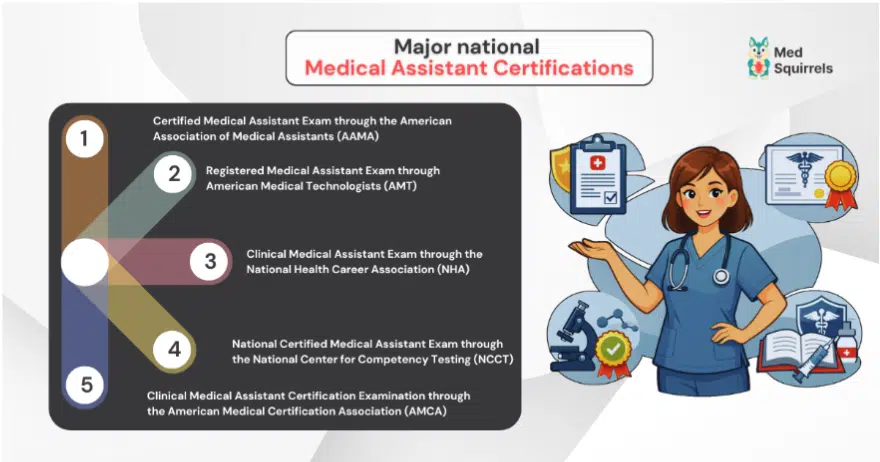
When planning to hire medical assistants, facilities must review the required certifications, whether for medical assistants or CNAs. Knowing about these factors ensures a smooth, efficient staffing process. A detailed infographic listing the necessary certifications for medical Assistants is included to provide a precise reference for better understanding.
Top medical assistant certifications
How healthcare facilities can decide which role to staff
When determining staffing needs for CNAs or medical Assistants, facilities must consider both strategic and operational factors. Evaluate patient acuity, the type of support providers require, and any administrative gaps.
Reviewing workflow efficiencies, care settings, and staffing ratios helps identify which role will contribute most to productivity and patient care. Understanding the daily functions of these roles also allows facilities to make informed staffing decisions and determine which is better, a CNA or a medical assistant, for each department.
Guidelines to determine the best fit:
- CNAs excel in long-term care, inpatient units, and settings where bedside assistance is critical.
- Medical assistants perform best in clinics, outpatient centers, and physician offices that require high levels of clerical and clinical support.
- Matching staff to workflow needs enhances patient experience, throughput, and team efficiency.
Compensation insights healthcare facilities must consider
Staffing decisions are often influenced by compensation, which affects employee retention and overall workforce stability. Comparing medical assistant compensation with CNA earnings helps facilities understand pay patterns and identify differences across outpatient and inpatient settings, medical assistant vs CNA pay.
Offering competitive salaries ensures that facilities attract qualified staff while maintaining budget control. Aligning pay with certifications, skills, and the complexity of care also improves job satisfaction and helps facilities determine which roles are best suited to specific positions.
Compensation considerations for staffing include:
- Understanding pay differences to create balanced, competitive salary packages.
- Evaluating which role is more appropriate for specific clinical and administrative functions.
- Adjusting compensation based on skill levels, certifications, and patient care demands to ensure retention.
Annual mean wage of CNAs by state
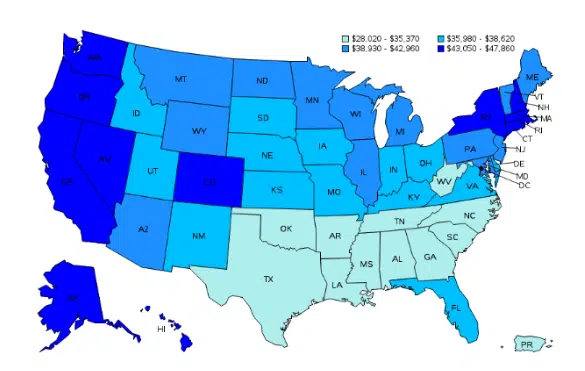
To effectively manage staffing, recruiters must stay informed about current compensation trends in the healthcare industry, enabling them to offer competitive pay that attracts and retains qualified professionals.
For example, when staffing for the role of a CNA, recruiters need to be aware of the current pay trends; a detailed infographic is provided to help understand compensation benchmarks and guide competitive salary decisions.
How the right partner supports faster and reliable staffing
Choosing the right staffing partner is essential for keeping your workforce steady and your daily operations running smoothly. Many facilities experience delays and coverage gaps because their staffing choices are not aligned with what roles like medical Assistants and CNAs actually require. This is where understanding the differences between medical assistants vs CNAs becomes essential, as each role has unique responsibilities that affect scheduling, workload distribution, and overall staffing decisions.
When recruiters are unaware of key role differences or compensation trends, such as medical assistant vs. CNA pay, making timely and accurate staffing decisions becomes much harder. A common challenge in healthcare is relying on traditional agencies without understanding how they operate. High markups can strain your budget and limit the number of qualified professionals you can hire.
Slow communication often leads to delayed confirmations or missed updates. Limited transparency around candidate quality, verified credentials, or availability increases the chance of mismatched placements and last-minute disruptions.
A modern platform like MedSquirrels helps prevent these issues by providing quick access to vetted candidates. Facilities can choose from three cost-effective staffing plans:
- Orange Plan: Recruitment + EOR/Payrolling for contract Medical Assistants, CNAs, and other support roles.
• Purple Plan: EOR/Payrolling support when your facility already has a candidate.
• Blue Plan: Recruitment for full-time clinical and non-clinical hires.
MedSquirrels charges only the payroll cost plus a flat fee per hire, making staffing more affordable and transparent. Whether you need a medical assistant, a CNA, or another role, the platform helps you improve speed, clarity, and overall stability. You can book a free demo to see how MedSquirrels supports smoother, more reliable coverage across your facility.
MedSquirrels also connects job seekers with top job opportunities at leading facilities nationwide. They can explore open jobs and apply for those that align with their professional goals.
FAQs
How can facilities ensure proper staffing?
Hiring the right staff requires assessing each unit’s specific needs. For example, if the focus is hands-on patient care, CNAs may be prioritized. If a role requires both patient interaction and administrative support, a Medical Assistant may be a better fit.
What factors influence the choice between staffing a CNA or a Medical Assistant?
Consider patient acuity, workflow requirements, and the type of support providers need. Facilities evaluating which is better, a CNA or a medical assistant, should match staffing choices with operational goals to maximize efficiency and patient satisfaction.
How can healthcare facilities streamline recruitment?
Partnering with staffing platforms or agencies that understand the nuances of CNA and medical assistant roles can accelerate hiring, reduce turnover, and ensure that staff are qualified for their specific responsibilities. Clear role definitions and compensation insights, such as medical assistant vs CNA pay, support informed staffing decisions.
How does MedSquirrels help facilities hire CNAs and Medical Assistants efficiently?
MedSquirrels provides curated candidate pools and affordable staffing plans. With MedSquirrels, you get curated profiles in 2 to 5 business days after posting a job. This enables healthcare facilities to fill CNA and Medical Assistant positions more quickly while ensuring candidates meet the required qualifications and skill standards.
Can MedSquirrels assist with both full-time and contract hires?
Yes. MedSquirrels handles full-time staffing, contract placements, and payroll management, allowing facilities to scale their workforce to meet patient care needs without operational disruptions.

Suresh writes about healthcare staffing and industry insights for MedSquirrels, helping professionals and facilities navigate hiring needs.