
9 key staffing issues for ASCs & how to fix them
Given the current situation in the USA, ambulatory surgery center staffing is crucial because it directly affects a clinic’s daily operations. Well-staffed centers run efficiently, handle patient cases on time, and maintain high-quality patient care.
Planned workforce schedules also support the clinic’s revenue growth and ensure compliance with regulations and ambulatory surgery center staffing requirements. Without the right skilled and experienced team, ASCs may experience delays in patient care, reduced patient satisfaction, and operational challenges.
In this blog, you will learn about the key recruiting issues facing ASCs and actionable solutions to help your centers maintain a strong, reliable workforce. As a recruiter, you must know that by addressing these challenges on time, your ASC can improve patient care, retain top talent, and strengthen overall workforce management.
Current trends and challenges in ASC staffing
Ambulatory surgery centers in the USA are facing multiple challenges in recent times, creating ongoing ASC staffing challenges. Many centers face high turnover and ongoing shortages of qualified professionals, including nurses and allied health professionals.
Due to these shortages, centers compete to hire anesthesiologists and other skilled professionals, making it more difficult for ASCs to staff. At the same time, a ready-to-retire workforce reduces the number of experienced professionals available to work. Growing patient volumes further increase pressure on existing healthcare teams.
These challenges make it critical for ASCs to recognize common recruiting issues and implement effective solutions, as addressed below, to improve overall ambulatory surgery center staffing stability.
Fluctuating staffing levels
Workforce levels in the ASCs may change daily. They directly correlate with surgical case volume, which in turn impacts the ambulatory surgery center’s staffing efficiency.
To overcome strain or challenges, ASCs must maintain efficiency. Healthcare owners should partner with modern staffing platforms to use per diem professionals and flexible scheduling models based on a structured ambulatory surgery center staffing model.
These planned approaches help centers to align and maintain workforce strength with patient demand while preventing overstaffing or burnout. A proactive recruiting strategy also improves operational stability and ensures consistent patient care delivery.
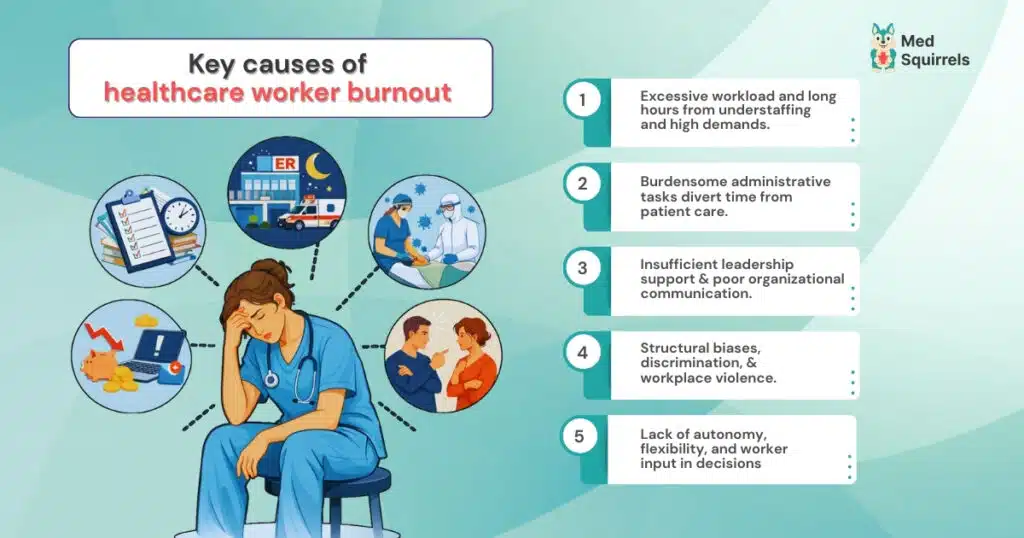
As a healthcare manager, it is your responsibility to assess whether conditions within the center are contributing to staff burnout. A detailed infographic is added to help you better understand burnout and its impact. A proactive recruiting strategy also improves operational stability and ensures consistent patient care delivery.
Common causes of healthcare worker burnout
Attendance gaps affecting operations
Major issues of these centers are unplanned absences. These leaves will increase workload and delay care, adding to existing ASC staffing challenges.
To cover these unplanned absences, healthcare owners should implement attendance-scheduling protocols. Giving cross-training to the existing staff will also ensure uninterrupted operations and minimize workflow gaps.
It also enhances the clinic’s work culture and supports better ASC workforce management practices.
Interpersonal conflicts impacting teamwork
Unprofessional behavior among your staff can destroy employee culture. Employees who do not have professional relationships with each other cannot enhance productivity. It also reduces patient satisfaction.
To overcome this, recruiting managers should hold regular team meetings and enquire about the work culture.
Facility owners like you must enforce professional standards, address conflicts in the facility promptly, and increase collaboration among teams to maintain operational efficiency in ambulatory surgery center staffing.
Owner involvement disrupting managerial authority
There are a few facilities or patient care centers where the owners will have direct involvement in decision-making. This interference may not always yield positive, quick results. It can slow your decision-making process.
Administrators or owners should divide the work and clarify roles, empower managers, and streamline recruiting approvals to maintain the facility’s agility while aligning with ambulatory surgery center staffing requirements.
Clear governance and defined authority help ensure faster recruiting decisions and stronger operational performance.
Ineffective facility culture and weak leadership
An unqualified leader at all levels will lead your facility to lower patient engagement and may spoil the center’s brand. It may start with not making timely policies and not managing employees.
This policy paralysis may undermine the effectiveness of surgery centers and weaken the ambulatory surgery center staffing model. Over time, weak leadership can lead to financial instability and a decline in patient trust.
Enhancing productivity and service quality requires strong leadership that implements clear policies and fosters a culture of accountability.
Manager support for ownership strategy alignment
An unsupported owner decision by the manager can leave your facility in operational disarray. Disconnections in management lead to confusion among staff. They also create inefficiencies in day-to-day operations. These issues can hinder progress toward key business goals.
They may also result in a loss of trust between management and ownership and negatively affect recruiting outcomes in ambulatory surgery centers. If you are in a leadership position, it is your responsibility to ensure managers remain focused on the facility’s strategic priorities.
Decisions must be communicated in a way that supports patient care. Managers must be aligned with the company’s vision. They should also be empowered to make decisions that advance long-term objectives.
Lack of communication and transparency
Insufficient information flow within your facility leads to confusion and inefficiency. When your staff is unaware of operational changes, workforce adjustments, or financial challenges, it can lead to misalignment, reduced morale, and workflow disruptions.
ASCs should maintain clear communication on operational changes, case volumes, and performance metrics to align teams and sustain workflow in line with effective ASC workforce management.
Providing timely updates and explaining the reasons behind key decisions helps build trust, improve accountability, and maintain operational stability.
Low trust and commitment among staff
High turnover and disengagement hurt service quality and revenue. When employees feel undervalued or disconnected from facility goals, productivity declines, and patient experience can suffer.
Leaders should build trust through recognition, career growth, and clear expectations, increasing retention and operational stability while addressing internal ASC staffing challenges.
Consistent feedback, transparent communication, and opportunities for professional development further strengthen employee commitment and long-term workforce sustainability.
Difficulty attracting specialized talent
ASCs often face significant challenges when you attempt to hire nurses and other allied healthcare professionals in a highly competitive market. Limited candidate availability, combined with strong demand from hospitals and other surgical facilities, can extend recruitment timelines and delay critical workforce placement.
For example, as a healthcare owner, if you want to hire surgical technologists, your facility needs to offer competitive pay, career development opportunities, and flexible schedules to hire and retain the specialized workforce needed for business growth and to support stable ambulatory surgery center staffing.
Providing structured onboarding programs and long-term retention incentives can further strengthen recruitment efforts and reduce turnover among specialized professionals.
As an owner, you must also stay informed about current market salary trends and prevailing pay ranges in the USA to remain competitive. A detailed infographic is added to provide a better understanding of current compensation benchmarks.
Annual wage of surgical technologists in the USA by state

Source: BLS
Strengthening long-term ASC growth through a modern platform
To successfully run an ASC, you must understand the issues that impact daily operations and apply the right solutions while strengthening overall ambulatory surgery center recruiting. Proactively addressing these challenges allows you to operate with fewer hurdles and deliver consistent patient care.
Running an ASC smoothly also requires recruiting skilled and certified professionals who understand your center’s environment and work culture. The right workforce protects your brand reputation and supports sustainable growth.
Securing qualified professionals requires a structured strategy. Free job portals often result in unverified applicants and time-consuming screening, while traditional agencies can increase costs and reduce control over candidate selection.
These limitations can slow recruiting and affect workforce stability. To overcome these barriers, partnering with a modern platform such as MedSquirrels provides a more strategic solution. Technology-driven platforms improve candidate visibility, streamline compliance and payroll processes, and better align with your operational needs.
MedSquirrels also provides affordable plans designed for healthcare facilities:
- Orange Plan – Recruitment plus EOR/Payrolling support for contract clinicians or non-clinicians while managing HR, payroll, compliance, and benefits.
- Purple Plan – EOR/Payrolling support when you already have a candidate and need HR, payroll, and benefits management.
- Blue Plan – Recruitment-focused support to efficiently hire full-time clinicians or non-clinicians.
By choosing a modern platform, ASC owners gain greater workforce control and reduced administrative burden. A structured strategy supported by the right platform enables you to operate your ASC with confidence, agility, and long-term stability.ASC owners can book a free demo to explore available plans. At the same time, professionals can visit our open jobs and apply directly, ensuring a smoother experience for everyone involved.
FAQs
Why is staffing crucial for the operational success of an ASC?
It is crucial because it directly impacts surgical throughput, patient safety, regulatory compliance, and financial performance. An optimized workforce ensures cases run on schedule, minimizes cancellations, and supports consistent patient outcomes
How can ASCs effectively manage fluctuating surgical case volumes?
ASCs can implement flexible scheduling models, maintain a per diem talent pool, and adopt a proactive workforce planning strategy. This approach aligns recruiting capacity with case demand while preventing burnout.
How does leadership quality affect ASC performance?
Effective leadership ensures policy implementation, team alignment, and accountability. Weak leadership can lead to disengagement, inefficiencies, and reputational risk, directly affecting both patient experience and revenue.
How does MedSquirrels improve compliance and payroll management for ASCs?
Through integrated EOR/payrolling solutions, MedSquirrels manages HR documentation, payroll processing, benefits administration, and regulatory compliance. This reduces administrative burden and mitigates employment-related risk for ASC owners.
Is MedSquirrels suitable for multi-location ASC groups?
Yes. The platform is structured to support both single-site centers and multi-location ASC networks. Standardized recruitment workflows and centralized workforce oversight enable consistent practices across facilities.

Suresh writes about healthcare staffing and industry insights for MedSquirrels, helping professionals and facilities navigate hiring needs.