
How can healthcare facilities adapt to evolving staffing demands
Healthcare recruiting in the USA is in dire need of improvement in workforce efficiency. Many facilities are turning to structured healthcare staffing solutions to manage rising operational pressures. It is because the number of patients requiring care is constantly increasing, creating ongoing recruiting challenges.
To overcome these, facilities must adopt innovative strategies and workforce management strategies. It will ensure your facility has an adequate workforce level. Workforce efficiency in the healthcare sector is a crucial factor that significantly impacts the quality of patient care, operational costs, and workforce satisfaction.
As facilities face the growing demands of patient care, maintaining the highest staffing standards becomes increasingly challenging. For facilities, major issues such as high burnout rates, workforce shortages, and unplanned scheduling can affect professionals and impact patient care.
Addressing these ongoing healthcare staffing challenges requires structured workforce strategies. This blog aims to help you address these demands and explain how providers must adopt strategic solutions to enhance recruiting efficiency.
Adopt flexible staffing models
Facilities can adopt flexible models, such as per diem, locum tenens, and full-time or contract staff arrangements, as part of effective workforce planning.
These models will help your facility to scale up your workforce in response to fluctuating patient volumes and seasonal demands. These models will give seamless integration of skilled professionals.
They minimize disruptions, optimize operational efficiency and cost control, and enhance patient care. There are multiple flexible models, and they are explained below.
Choosing per diem and locum tenens staffing models
Clinics need to handle fluctuations in patient volume. To manage this, clinics can choose per diem and locum tenens providers.
These temporary professionals can assist facilities in filling gaps during peak times, such as vacations or unexpected absences, ensuring patient care remains uninterrupted while addressing short-term challenges.
Opting for contract and full-time staffing
Facilities in the USA can gain flexibility to handle changing staff demands by adopting a contract-and-full-time recruiting model within the facility.
It ensures a stable workforce and supports efficient planning. This planned approach also lets managers reduce costs without compromising care quality in the facility through reliable healthcare staffing solutions.
It helps facilities respond quickly to workforce gaps while maintaining continuity of care. Facility leaders must also monitor current trends to adjust staffing shortages and maintain workforce stability.
Benefits of practicing flexible staffing
- Improved responsiveness: Flexible models enable quick adjustments to staffing levels in response to real-time needs.
- Cost efficiency: By aligning workforce levels with actual patient demand, facilities can minimize unnecessary labor expenses while maintaining operational effectiveness.
- Increased staff satisfaction: Flexible models give staff greater control over their schedules, leading to higher job satisfaction and stronger workforce management.
Leverage the usage of telehealth and modern technology
In this modern technological world, facility owners like you need to adopt new technologies such as A.I. and telehealth.
These new technologies will enhance patient care, reduce the burden on current staff, and support effective healthcare staffing solutions.
Technology adoption also supports better operational efficiency across departments. The key applications of these technologies are explained below.
Expansion of telemedicine
The COVID-19 pandemic has increased the usage of telemedicine technology. It is a trend that is likely to grow and continue. Facility owners like you should consider and invest in telehealth infrastructure and train your staff to deliver virtual care.
This not only increases access to care but also allows efficient management of professionals’ time in the facility through better healthcare workforce management.
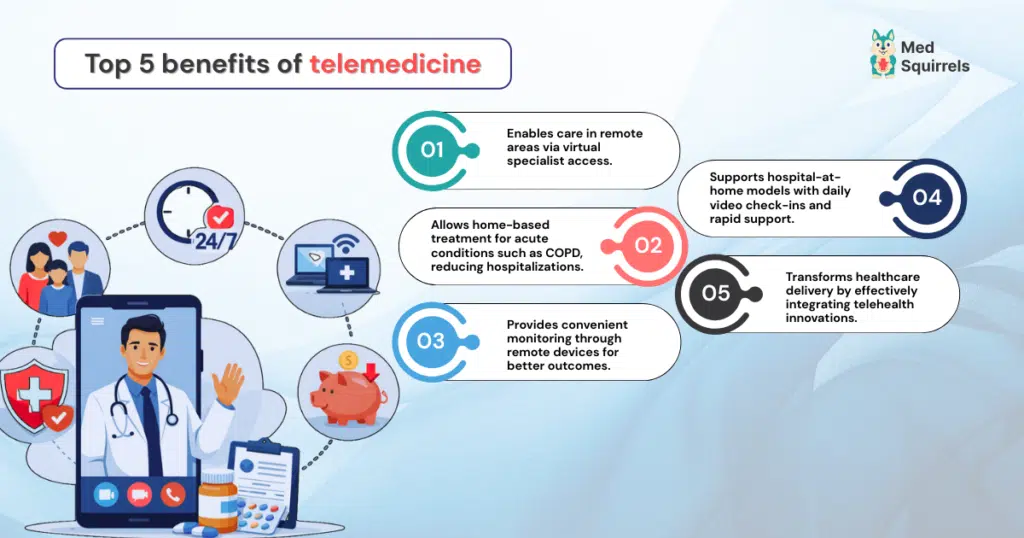
To expand telemedicine services in your facility, as a facility owner, you must clearly understand its benefits. A detailed infographic is added to explain these benefits in depth.
Key benefits of telemedicine
Using AI and automation technology
Applying AI-driven technology at your facility can streamline administrative tasks such as scheduling, patient triage, and documentation, allowing providers to focus more on direct patient care.
Using automation technology in your facility can also predict workforce needs based on historical data, helping managers better allocate resources and strengthen workforce management. When internal investment in such tools is prohibitive, partnering with a vendor that offers these platforms can be a solution.
Prioritise employee well-being
Supporting employee well-being is essential for maintaining a productive and engaged workforce. Facilities that focus on staff well-being see improved morale, stronger performance, and better patient outcomes while reducing long-term healthcare staffing challenges.
For example, when you hire a nurse practitioner, you must take all necessary steps, including mental health support and workload management, to protect their well-being and support their professional stability.
Work-life balance
Maintaining work-life balance plays a key role in employee retention and satisfaction. Flexible scheduling options and ensuring adequate time off are vital for preventing burnout.
Facilities can offer part-time positions, job sharing, and remote work options, where feasible, to help staff maintain better work-life balance and support sustainable healthcare workforce planning. Strong work-life balance policies also help improve staffing in healthcare by increasing retention and reducing turnover.
Enhance recruitment and retention strategies
Improving recruitment and retention enables facilities to keep the right employees. It also makes it easier to build a strong and reliable team.
Effective strategies create an environment where professionals feel valued and motivated through structured healthcare staffing solutions.
Professional development opportunities
Providing clear career development programs and opportunities for professionals can enhance job satisfaction and loyalty among your employees.
Facilities can offer continuing education programs, leadership training, and support for advanced certifications, strengthening workforce management.
Competitive compensation and benefits
To attract and retain skilled talent, facilities must offer competitive salaries and benefits. This includes benefits such as health insurance, tuition fee reimbursement, and support for childcare services, which help support long-term healthcare workforce planning.
For example, when you hire a dental hygienist for your facility, it is your duty to offer a market-trending salary. To do that, you must stay aware of current compensation benchmarks; a detailed infographic on salary trends is provided.
Annual wage of dental hygienists by state in the USA
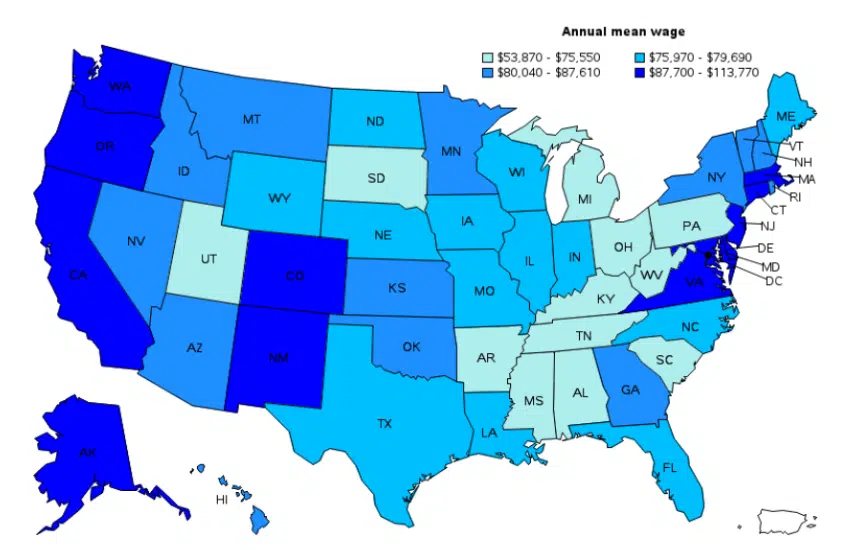
Source: BLS
Preparing for evolving staffing demands with the right platform
To adapt to evolving workforce demands, facilities must first understand current and emerging trends. Knowing what’s changing reduces half your stress upfront. The remaining challenge depends on how you hire your talent and whether your process supports long-term workforce management.
When facilities plan hiring with clarity, they avoid rushed decisions and recurring staffing gaps. Many facilities still rely on traditional agencies, but this approach creates ongoing challenges. Agency hiring often comes with high markups, limited transparency, and slower turnaround times.
These challenges affect budget control, workforce stability, and overall workforce planning. As demand increases, these gaps become harder to manage. To avoid these challenges, facilities should partner with modern platforms like MedSquirrels that deliver reliable solutions.
MedSquirrels simplifies recruiting by combining structured recruitment, compliance support, and cost control into a single platform. It supports facilities of all sizes with affordable plans for different recruiting needs.
The Purple Plan offers full HR, payroll, and benefits management for contract clinicians or non-clinicians that facilities source directly.
The Orange Plan provides end-to-end recruitment for contract roles, along with HR, payroll, and benefits, for greater stability and control.
The Blue Plan supports comprehensive recruitment for full-time roles with no ongoing costs.
MedSquirrels uses a flat-fee model to keep recruiting budgets predictable. There are no excessive agency markups, so you only pay provider wages and the platform’s license fee. This results in meaningful cost savings while ensuring professionals receive competitive pay through trusted staffing solutions.
By partnering with MedSquirrels, you get transparency, affordability, and operational efficiency without sacrificing care quality.
Facility recruiters can book a free demo to see how our platform is transforming workforce management. Professionals can browse open jobs and apply for those jobs that fit with their professional requirements.
FAQs
Why is staffing efficiency important in facilities?
It is important because it directly affects patient care quality, employee satisfaction, and operational costs. When facilities maintain balanced workforce levels, they reduce burnout, prevent scheduling gaps, and improve clinical outcomes.
What are the common challenges faced by facilities?
Facilities often struggle with workforce shortages, high turnover, burnout, and unpredictable patient volumes. Poor scheduling systems and reactive hiring further strain operations. Addressing these challenges requires structured planning and proactive workforce strategies
What is the difference between per diem and locum tenens staffing?
Per diem professionals typically work short-term shifts as needed, often locally. Locum tenens providers usually fill temporary vacancies for a defined period. Both models help facilities manage short-term workforce gaps without long-term commitments.
How is MedSquirrels different from traditional agencies?
Unlike traditional agencies that charge high markups and limit visibility into pay structures, MedSquirrels operates on a flat-fee model. Facilities pay provider wages plus a platform license fee. This creates cost clarity and ensures competitive compensation for clinicians
What types of facilities can use MedSquirrels?
MedSquirrels supports facilities of all sizes, including hospitals, clinics, schools, and specialty practices. Its structured plans allow organizations to choose recruitment-only support or full HR and payroll management based on operational needs

Jani Basha is a healthcare content expert at MedSquirrels, sharing insights on staffing trends, hiring best practices, and career growth.