
How to hire allied healthcare professionals quickly and cost-effectively
Healthcare facilities across the country are facing staffing challenges in filling several crucial positions, especially in allied healthcare. In recent times, allied health professionals such as physical therapists, radiographers, and respiratory therapists have become an essential part of clinics, delivering efficient patient care. As a result, many facilities are looking to hire allied healthcare professionals to maintain quality care and meet growing patient demands.
This blog explains the challenges of allied healthcare staffing and offers top, proven strategies for recruiting professionals to help you overcome workforce gaps at your facility. These explained strategies will assist you in building a stronger workforce to provide better patient care.
Top challenges in allied healthcare staffing
Recruiters planning to hire skilled allied healthcare professionals must understand that the recruiting process may present multiple challenges. These can be due to high demand, growth in the aged population, a shortage of skilled professionals, and increased availability of affordable healthcare.
These challenges create a limited talent pool, driving competition to recruit allied healthcare staff. Along with these, most healthcare facilities may also face staffing shortages due to delays in credentialing, licensing, and onboarding. The following points address challenges in recruiting for allied healthcare careers in the USA.
- Competitive job markets lead to increased salaries
- Unplanned onboarding process
- An increase in the number of candidates with limited skills
- Partnering with traditional agencies
Clinical owners must understand that if these issues are not addressed early, the allied healthcare staffing process becomes longer and may exceed their budget. So, to overcome these challenges, recruiters must follow a few proven steps to improve recruiting.
Strategy #1: Understand your staffing demands
Recruiters need to maintain a detailed record of their staff numbers, as this will help them evaluate the clinic’s current situation. It will also help your facility to accurately assess its workforce requirements based on clinical workload and service needs.
Staffing requirements at clinics primarily increase due to rising patient volume, seasonal pandemics, and unplanned leave and team dropouts. These factors will lead to workforce gaps.
These workforce gaps can lead to stress among existing staff, damage your facility’s brand image, and affect patient care if not addressed quickly. To overcome these workforce gaps, as a recruiter, you must choose the recruiting model that best fits your clinic. Proven recruiting strategies are listed below.
- You must also evaluate recruiting approaches that can clarify how staffing demands can be met
- Practicing different recruiting models, such as contract and full term that help you assess workforce needs
These approved tips will help your clinic address allied healthcare staffing shortages.
Strategy 2: Build your facility’s brand reputation
Facilities in this modern world must recognize that a strong brand image helps them hire allied healthcare professionals. To build a strong brand image, facilities must earn the trust of patients and staff. A strong brand image can be achieved by providing quality patient care and professionalism in the workplace. Maintaining a consistent brand image will further enhance your chances of overcoming workforce shortages in healthcare.
In order to increase your brand image, you must follow a few proven practices, such as :
- Maintaining an employee-friendly clinic.
- Award with competitive salaries on time to your employees.
- Encouraging allied healthcare professionals with professional development courses.
- Ensure that you are equipped with modern technology.
These practices help you build a brand image and assist when you plan to hire allied healthcare professionals.
Strategy #3: Improve the quality of your job description
Crafting a detailed job description is a vital point in staffing. Clinical owners planning to hire allied healthcare professionals must know how to create a detailed job description, as it will help them meet their workforce requirements and attract only interested candidates for the role. Creating a detailed job description for allied healthcare staffing helps job seekers clearly understand their role, responsibilities, and duties.
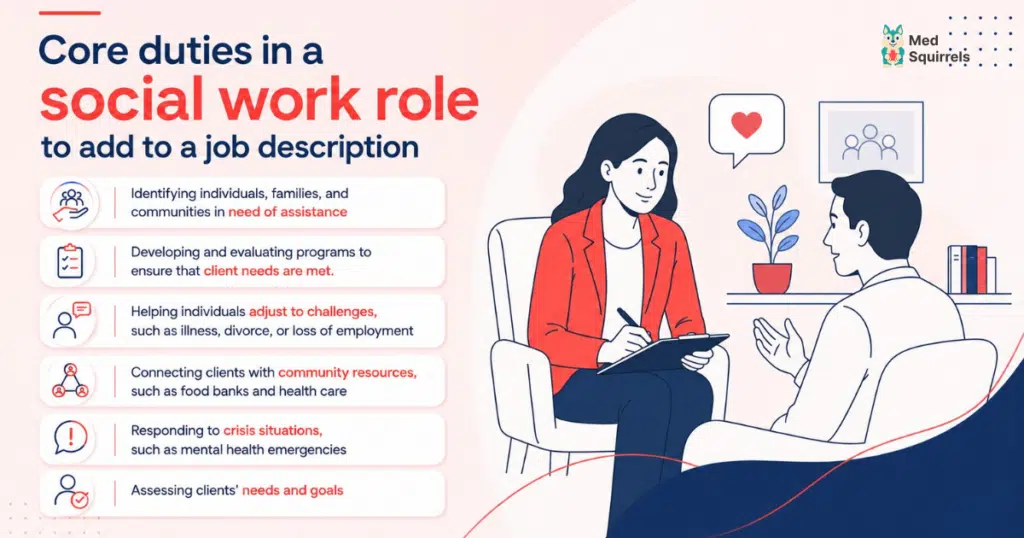
For example, if you want to hire social workers in New York, you must mention in the job description that the candidate is aware of the work location and the roles and responsibilities. A detailed infographic has been added to clarify the key responsibilities that should be included in a social worker’s job description.
Strategy #4: Use internal referrals to hire
One of the best and proven strategies for staffing is to encourage employee referrals. If you plan to hire allied healthcare professionals within your budget, it is best to use a referral program. When your facility needs healthcare staffing, such as an occupational therapist, please check references through your employees’ networks.
It will help you hire skilled, experienced occupational therapists who may be a good fit for your clinic. To encourage employee participation, you can offer referral incentives once employees are hired. This cost-effective approach will help you to overcome staffing shortages in the healthcare facility.
Strategy # 5. Build partnerships with medical training institutes
Recruiters must always encourage new talent. This will also help them to hire skilled new graduates, which can be an affordable method to hire allied healthcare professionals. In this process, healthcare owners must maintain partnerships with educational institutions that can help their facilities build talent pools.
This partnership will also help you maintain structured allied healthcare staffing, improving patient care. Such partnerships will provide an affordable way to hire new talent to help overcome workforce gaps during pandemics.
Strategy #6: Attract talent with strong compensation
Healthcare recruiters must understand that offering competitive, attractive packages not only improves their chances of attracting allied health staff but also enhances the facility’s brand image as a well-paid workplace. This process helps clinics to overcome staffing shortages in healthcare.
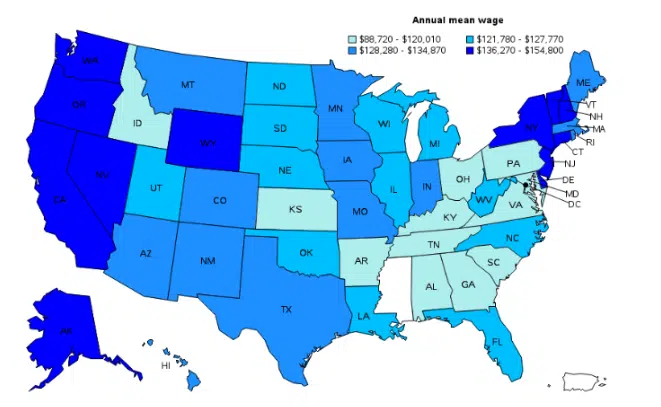
Recruiting must understand that awarding competitive salaries will strengthen your overall reputation. For example, if you are planning to hire physician assistants for your hospital in Nevada, you need to pay $154,800; offering a competitive salary is a better strategy to hire quickly. As a recruiter, you must stay of the current pay structure across the country during recruiting. To provide you with a clear understanding of salaries, a detailed infographic has been added.
Annual salaries of physician assistants by state in the USA
Selecting the right platform for allied health staffing
Hospitals facing healthcare staffing shortages must implement planned strategies to ensure patient safety and satisfaction. It is a better option to avoid traditional agencies, as they often lack transparent pricing, offer a limited talent pool, provide no proper onboarding, and may increase your overall recruiting costs. In the same way, free job portals also come with recruiting challenges, such as unverified profiles, a lack of certified candidates, and delayed candidate responses.
To overcome these challenges, clinics should partner with modern platforms such as MedSquirrels, which offer verified profiles and a large talent pool for hiring both contract and full-time staff. MedSquirrels also offers three cost-efficient staffing plans. It also uses a flat-fee pricing model in which you pay only the resource’s monthly payroll cost and a flat hourly fee.
Recruiters can also book a free demo to see how the platform helps them make planned recruiting decisions. Professionals can also check open jobs and apply for those that match their skills.
FAQs
How can recruiters reduce time-to-hire for allied healthcare positions?
Recruiters can reduce recruiting cycles by maintaining pre-screened talent pools, using structured job descriptions, leveraging referral networks, and adopting modern staffing platforms.
How can recruiters improve candidate quality in allied healthcare hiring?
Improving job clarity, screening for verified credentials, using referral programs, and partnering with trusted training institutes help improve candidate quality.
How can recruiters build strong pipelines for allied healthcare careers?
Recruiters can build strong pipelines by partnering with educational institutions, maintaining a pool of pre-screened candidates, and using employee referral programs. They can also use staffing platforms like MedSquirrels to access verified allied healthcare professionals and speed up hiring.
How does MedSquirrels help recruiters reduce time-to-fill for healthcare roles?
MedSquirrels helps recruiters reduce time-to-fill by providing access to pre-vetted healthcare professionals, enabling faster matching and quicker hiring decisions. This allows recruiters to fill critical vacancies without prolonged delays.
What makes MedSquirrels suitable for large-scale healthcare staffing needs?
MedSquirrels is designed to support scalable hiring by offering a broad pool of healthcare professionals across multiple specialties. This helps recruiters meet fluctuating workforce demands across different departments.

Suresh writes about healthcare staffing and industry insights for MedSquirrels, helping professionals and facilities navigate hiring needs.