
The role of flexible staffing models in modern healthcare
The role of flexible staffing models in modern healthcare
The healthcare sector is changing rapidly, and adapting to changing workforce needs has become essential for you. With increasing patient needs, workforce shortages, and the necessity for operational efficiency, planned staffing models in healthcare are now necessary for your facility.
Whether you are running a hospital, clinic, or long-term care facility, juggling a stable workforce with variable demands can be tricky. Traditional recruiting models fail to meet the healthcare staffing shortages you face. Heavy dependence on full-time staff can result in burnout for your team, while heavy reliance on temporary staff destabilizes your teams. What is the remedy for you?
A carefully designed, flexible recruiting model that harmoniously merges contractual and full-time recruiting to maximize patient care and workforce effectiveness in your facility. Implementing strategic healthcare staffing models is vital in today’s healthcare landscape.
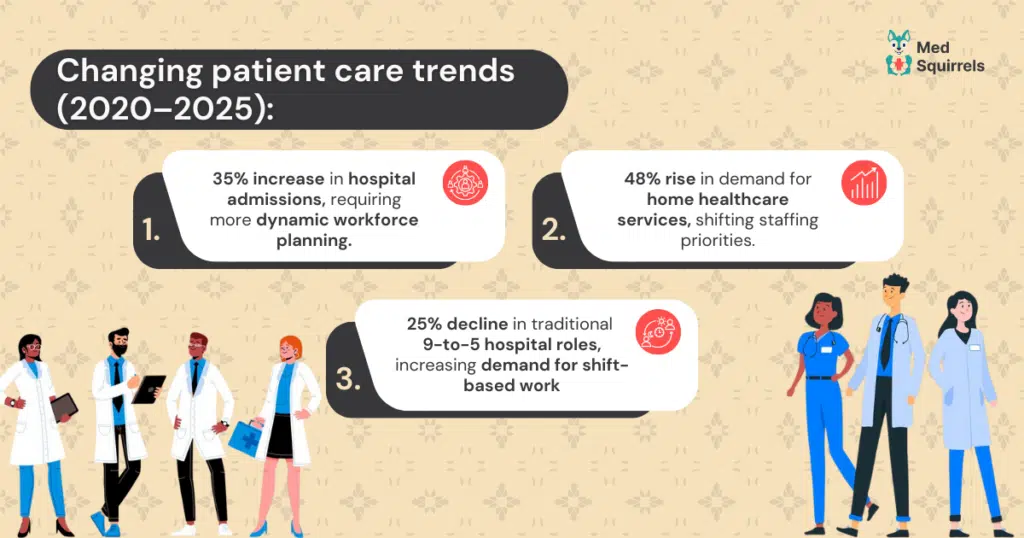
Evolving patient care trends
Why flexible staffing models in healthcare are essential
Flexible staffing models in healthcare allow you to maximize resource utilization, ensuring the appropriate expertise is available at the right time in your facility.
They also enable you and your healthcare facilities to anticipate and manage recruitment issues. It improves your capacity to deliver seamless, efficient care under varying conditions. These models can include:
- Full-time recruiting for long-term workforce stability
- Contract-based staffing for temporary, specialized needs
- Per diem professionals to address sudden patient surges
- Hybrid models combining full-time and contract-based roles
By implementing flexible recruiting, you and your healthcare facility can provide continuity of care while maximizing your workforce expenses. The need for such flexible staffing models in healthcare has become more prominent, particularly amid the rising demand for registered nurses, as you may be noticing.
If you are looking to hire registered nurses or other healthcare roles, you can benefit from a well-balanced, flexible recruiting model that ensures patient care and operational efficiency in your workplace. A widening shortage of healthcare professionals presents a significant problem for you. With such a limited pool of well-trained workers, your facilities need to reconsider how they manage employees.
Not only does this shortage affect the delivery of quality care in your hospitals, but it also places unwarranted strain on your current staff. Facilities looking to address staffing shortages in healthcare must adopt flexible recruiting, as it helps bridge these workforce gaps by ensuring that you and your clinics have the right professionals at the right time.
Flexible staffing models in healthcare are one way you can alleviate these pressures without compromising the consistent, effective delivery of patient care in your setting.
- Increased stress and burnout among full-time employees
- Difficulty in covering shifts during peak demand
- High turnover rates due to excessive workload
A flexible recruiting model allows you to expand or contract your staff as needed, ensuring smooth patient care without overextending your personnel. Many healthcare facilities like yours now prefer modern staffing platforms that offer greater flexibility and efficiency than traditional methods you might have used.
How flexible staffing models solve staffing shortages in healthcare
Burnout is a serious problem within the industry that you have likely seen. Overworked healthcare professionals at your facility tend to experience exhaustion, leading to decreased job satisfaction and increased turnover. By implementing flexible recruiting in healthcare, you and your institutions can encourage a healthier work-life balance for your healthcare professionals, resulting in:
- Improved job satisfaction and retention rates
- Reduced absenteeism and fatigue
- A more engaged and motivated workforce
When your staff has the flexibility to manage their schedules, they can deliver better patient care while maintaining their well-being, benefiting you and your facility. Facilities like yours that adopt efficient staffing models often see better workforce stability and improved patient outcomes.
Combining contract and full-time staffing models in healthcare
Stability with full-time recruiting
Full-time staff are the backbone of every healthcare facility you manage. They are stable, consistent, and possess great institutional memory for your clinics. Using only full-time employees, though, can create problems for you from sudden spikes in patient volume. This strategy might also lead to increased stress and burnout among employees working overtime.
To counter these weaknesses, implementing flexible staffing models can provide sufficient support during surge times without compromising your employees’ health. Flexible staffing models in healthcare ensure that you and your healthcare facilities can scale your workforce efficiently, maintaining patient care standards and staff well-being.
Agility with contract-based recruiting
Contract recruiting is flexible if you and your facilities need to cover short-term vacancies, acquire specialized expertise, or adapt to seasonal patient volumes. It helps you address immediate staff needs without sacrificing operational efficiency in your workplace. This method provides:
- Access to specialized professionals without long-term commitments
- Faster recruiting and onboarding processes
- Cost savings by reducing overtime for full-time staff
Integrating contractual and full-time recruiting allows you and your healthcare facilities to maintain a stable yet adaptable workforce. If you are exploring cost-effective staffing solutions, you can benefit from models that eliminate unnecessary markups while ensuring quality hires for your team.
To make the right workforce decisions, it is also important to understand how short-term roles compare with full-time hires and how each impacts your operational efficiency.
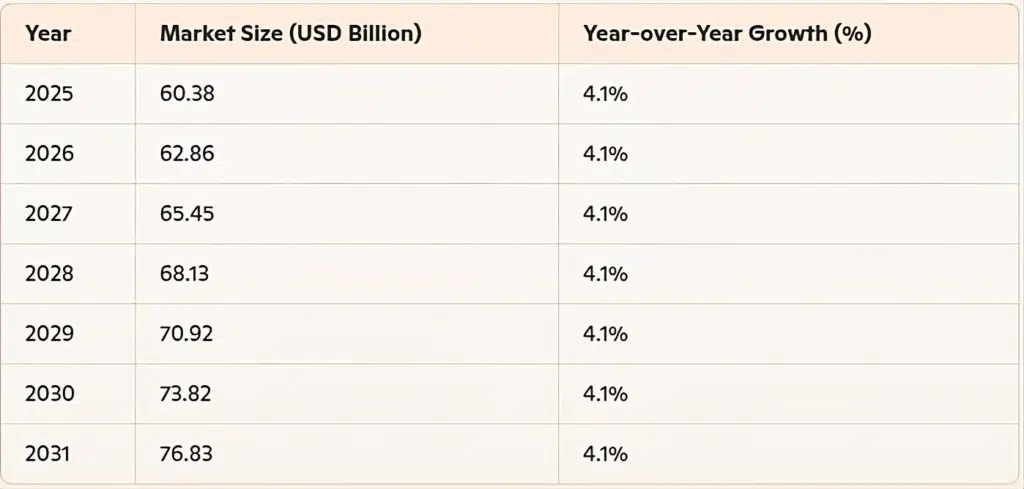
As the table below shows, the temporary healthcare staffing market in the USA is projected to grow at a steady 4.1% annually, reaching $76.83 billion by 2031, a trend you can leverage for your recruiting needs.
The projected growth of the temporary healthcare staffing market (2025–2031)
Source: EIN Presswire
Workforce management in healthcare using flexible staffing Models
To effectively implement flexible staffing models in your healthcare facilities, you should develop a proactive staffing strategy that aligns with your patient demand and workforce availability:
- Identify workforce gaps and predict staffing needs.
- Balance full-time employees with contract-based professionals.
- Leverage technology for efficient workforce planning.
- Ensure compliance with industry regulations and certifications
- Strategic workforce planning helps healthcare facilities maintain high-quality patient care while managing operational costs effectively.
Strategic workforce planning helps healthcare facilities quickly fill open positions and maintain high-quality patient care while effectively managing operational costs.
Strategic workforce planning helps you and your healthcare facilities maintain high-quality patient care while effectively managing operational costs.
For instance, you can hire a physician assistant to handle specialized patient cases during high-demand periods, ensuring consistent care delivery without straining your existing team.
Alternatives to traditional healthcare staffing agencies
Many healthcare facilities use traditional agencies or free job portals to fill workforce gaps. These options are often considered quick fixes for you, but may fail to meet the needs of your healthcare facilities.
Moreover, they can hinder your long-term workforce planning and operational efficiency. However, these solutions often come with significant downsides for you:
- High costs – Agencies add unwanted markups, middleman fees, and hidden charges.
- Lack of control – Facilities have limited oversight over candidate selection
- Slow recruiting process – Traditional methods can be inefficient and time-consuming
- Managed service providers (MSPs) – Often add unnecessary complexity and expenses
Instead of navigating these challenges, healthcare employers can turn to transparent, efficient healthcare staffing solutions. This is where MedSquirrels transforms the recruiting experience.
Most traditional healthcare agencies have several drawbacks, such as high markup, slow sourcing, and inaccurate credentialing. On the contrary, MedSquirrels will grant the following benefits to you:
- No middlemen – Hire and manage top talent using a singular platform
- No MSPs, just flat fee pricing – No markup costs, just pay the payroll costs and a flat license fee
- Fast & efficient recruiting – Streamlined recruitment to fill roles quickly
- Enhanced recruitment workflow – Gain more control over candidate movement, allowing for a faster process.
- Track candidates directly from your dashboard – Get a centralized view of candidate progress with real-time updates for easy monitoring
- Stay informed with improved email reminders – Receive timely notifications for new activities and pending actions to keep your recruiting on track
- Filter by status for efficient resource requests management – Easily sort and manage requests to streamline recruiting operations.
MedSquirrels offers healthcare staffing models to match your facility’s different workforce needs. This technology-powered platform also offers three cost-efficient plans. They are designed to help you meet your contractual or full-time resource requirements, or to onboard your self-sourced talent in compliance.
It also uses a flat-fee pricing model in which you pay only the resource’s monthly payroll cost and a flat hourly fee. Facilities can request a free demo and see how MedSquirrels can transform your healthcare recruiting process. Healthcare professionals can also check open jobs and apply for those that match their skills.
FAQ's
What is flexible staffing in healthcare?
Flexible staffing in healthcare is a workforce strategy in which healthcare facilities use a mix of full-time, contract, and per diem professionals to align staffing levels with patient demand. This approach helps ensure the right staff is available when needed while maintaining efficiency and quality of care.
How does flexible staffing reduce healthcare costs?
Flexible recruiting reduces healthcare costs by enabling facilities to adjust workforce levels in response to actual demand. This helps avoid overstaffing during slower periods and reduces overtime expenses during peak times, while also lowering dependence on expensive staffing agencies.
How to manage staffing shortages in healthcare?
Healthcare facilities can manage staffing shortages by adopting flexible staffing models, recruiting contract or per diem professionals when needed, using digital staffing platforms for faster recruitment, and improving staff retention through better work-life balance and planning based on patient demand
How does MedSquirrels simplify healthcare staffing?
MedSquirrels provides healthcare staffing solutions by eliminating agency markups, offering direct access to top talent without middleman fees, and delivering faster recruitment.
Can I track candidates in real time with MedSquirrels?
Yes! MedSquirrels offers cost-effective staffing solutions with a centralized dashboard where healthcare employers can seamlessly track recruiting progress and manage candidate pipelines.

Jani Basha is a healthcare content expert at MedSquirrels, sharing insights on staffing trends, hiring best practices, and career growth.