
7 strategies to combat the staff shortage in radiology
Radiology staff play a crucial role in the healthcare team. They use imaging technologies such as ultrasound, CT scans, MRIs, and X-rays to ensure accurate diagnoses.
These diagnoses empower doctors and physicians to personalize patient treatment. owever, there is a radiology workforce shortage across the nation, and it is posing a significant challenge to facilities, contributing to the growing radiology staffing shortage.
These challenges have impacts more than just facilities and hospital staffing concerns. It significantly impacts patient care due to a lack of speed and quality. As the demand for radiology services exceeds the available workforce, both clinics and patients face significant challenges related to the shortage.
In this blog, you will learn strategies to combat this crisis and get ideas to improve staff retention and address the radiology staffing shortage. Along with this, as a recruiter, you will also know the main reasons contributing to the shortages.
Key factors contributing to the radiology shortage
Factor #1: Growing elderly population
The growth in the aged population nationwide is a driving factor behind higher demand for radiology services.
Aging populations are in greater need of medical imaging. This requirement is placing additional strain on the already stretched radiology workforce and worsening the radiology workforce shortage.
Factor #2: Increasing demand for medical imaging
Recent developments in medical technology have made healthcare imaging services a vital part of patient care.
This demand is creating a major gap between available radiology capacity and service growth. Workforce capacity outpaces recruiting, increasing pressure on radiology staffing.
Factor #3: Increase in the number of aged workers
The radiology sector is currently facing challenges related to an aging workforce approaching retirement. As experienced professionals near retirement age, workforce shortages may occur, creating an imbalance in your team’s workforce levels due to the radiologic tech shortage.
This can result in delays in patient care, may lead to burnout, and will increase turnover rates among younger team members.
Factor #4: No planned workforce scheduling
Clinic workforce demand can increase due to patient volume and unexpected absences. Maintaining planned staff scheduling ensures your facility runs smoothly without compromising patient care and helps effectively manage radiology staffing shortages.
It allows facilities to adjust workforce levels in response to patient demand and seasonal fluctuations. This planned scheduling approach reduces operational disruptions caused by the radiology staffing shortage.
Over time, based on your facilities’ requirements, flexible workforce planning will improve cost control while maintaining consistent care quality.
Factor #5: Limited usage of technological solutions
Modern technologies such as AI promise to mitigate the shortage by automating tasks. Clinics can use technology-enabled staffing software that can automate work scheduling and support radiology staffing solutions.
With AI, you can transform radiology services, enabling radiologists to manage their workload more effectively and possibly mitigate the current shortage.
7 strategies to combat the staff shortage in radiology
The radiology workforce shortage is becoming a serious concern across healthcare systems. Many facilities are struggling to maintain adequate staffing levels while meeting increasing patient demands.
Implementing strategic solutions can help facilities fix staffing shortages, stay competitive, and ensure consistent patient care.
Strategy #1: Improve employer branding
In this modern world, brand value has its own importance. A strong employer brand in the present market will give you multiple benefits.
To get a strong brand value as a facility owner, implement a few values. Follow values such as being employee-friendly management.
Providing a stress-free work environment. And maintaining a strong media presence, including social media, to promote your values. It will help you create a positive image in society.
Besides core values, your clinic must be well-known for employee encouragement, which is also important because it lowers employee dropout rate.
Employee encouragement can include regular promotions and sponsoring skills development courses. This brand image is what most job seekers think about before choosing your hospital.
These values help you build a strong image and attract potential hires in a competitive radiology staffing market. Make sure your employer brand clearly communicates for better staffing.
#2 Hire on the clinic’s necessity
Staffing for a role in the radiology sector is a continuous process for a clinic or facility. It can be because of multiple reasons. Such as unplanned leaves. The increase in the number of workforce members preparing to retire.
Unexpected growth of patients. And workforce dropouts are linked to the radiologic tech shortage. To overcome workforce gaps as a recruiter, you must make planned decisions. It may include a thorough evaluation of the required workforce numbers.
If your facility is in immediate need of healthcare staff, you need to choose a flexible workforce model, such as contract or per diem staff. Flexible radiology department staffing models allow you to quickly hire and adjust workforce levels in response to patient growth.
They help you provide patient care effectively during the radiology workforce shortage. It reduces the pressure of full-time recruiting while ensuring patient satisfaction and maintaining operational stability throughout the recruitment process.
To help you hire efficiently, multiple flexible approaches are outlined below to make your staffing easier.
- Opt for temporary staffing: This involves recruiting employees for a defined period or until a specific season is completed.
- Temp-to-hire: It refers to recruiting a professional on a temporary basis with the potential for full-time employment after a performance evaluation.
- Contract staffing: Focuses on engaging employees under a contractual agreement for a set term.
Strategy #3: Prepare an effective job description
The initial step for a healthcare recruiter when staffing is to draft a detailed job description with a clear understanding of the role’s responsibilities. Those responsibilities must include everything from patient care to imaging device management.
When drafting a job description, it must also address whether specialized equipment or specific applicants are required. These details will help you attract qualified candidates with the necessary skills for the position.
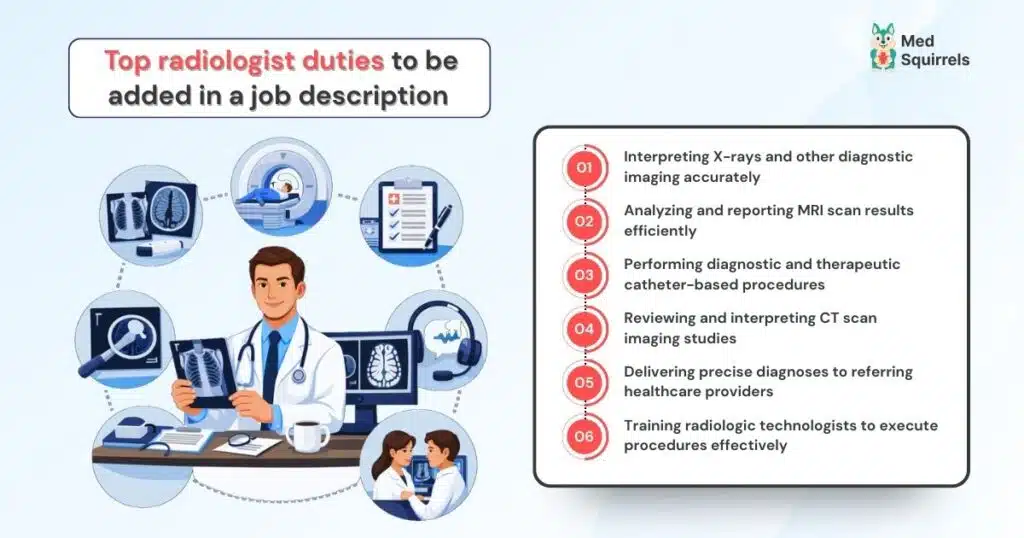
By providing a glimpse into the responsibilities, you help professionals see the value and purpose of their job. For example, if your clinic is planning to hire a radiologist, make sure the job description clearly outlines responsibilities to support recruitment and strengthen radiology staffing solutions.
To provide a detailed understanding of what can be included in a job description, an infographic has been added to streamline staffing.
Key radiologist duties to include in a job description
Strategy #4: Use referral programs to hire
Healthcare managers can encourage employee referral programs. This is because referrals are considered the most powerful staffing tools to overcome recruitment challenges arising from the radiology workforce shortage.
Whenever you plan for radiology technologist recruitment, it is better to check your current staff’s networks. It may help you access qualified talent, which typically yields more experienced candidates who may stay longer at your hospital.
To increase employee participation in a referral program, offer attractive incentives. This will encourage your staff to refer to certified talent.
Strategy 5: Maintaining a positive workplace culture
If a healthcare team needs to work without stress, you need to maintain a positive culture in your facility. A positive workplace culture is the main component of employee retention.
The healthcare workforce, specifically imaging professionals, must feel happy when they come to work and work together to promote patient satisfaction.
Clinics need to create a work culture where their staff feel comfortable. This culture will naturally enhance the facility’s image, help you attract candidates through referrals, and keep your team without gaps.
As a recruiter, you must remember that failing to maintain a positive work culture leads to poor performance, and unhappy staff will eventually leave to search for better opportunities.
Vital points to maintain a better work culture that help you to hire candidates are addressed below.
- Open communications must be encouraged.
- Promote a collaborative teamwork culture.
- Value your employees and celebrate their achievements
Strategy #6: Optimize the onboarding process
Facility owners might be aware of the importance of the onboarding process. It is a vital process done after recruiting that can significantly impact overall staffing outcomes during a radiology staffing shortage.
Recruiters need to implement a planned onboarding process to overcome staffing shortages. It helps their facility ensure that newly hired professionals receive the required instructions about the role and the facility, including its dos and don’ts.
These detailed instructions help a candidate prepare to care for patients seeking imaging services. To optimize the onboarding process, clinics need to maintain digital onboarding solutions, such as eLearning platforms and virtual orientations.
These can help new hires understand your facility and adapt more rapidly and efficiently. These efforts not only increase employee engagement but also help professionals maintain long-term relationships with your facility.
Strategy #7: Award competitive compensation packages
Encouraging your employees with competitive salaries is a vital step in reducing burnout in your team. Clinic owners must understand that offering competitive wages not only increases their chances to attract skilled radiology staff but also motivates them to stay longer with the facility.
Recruiting managers planning radiology technologist recruitment must know that competitive wages also position your facility as an employer of choice in a competitive market and strengthen your overall branding.
A facility that offers competitive compensation is more likely to reduce recruitment challenges caused by the radiology staffing shortage.
For example, if you want to hire a radiology technician, offering a market-trending salary is essential. As a recruiter, it is your duty to stay up to date on the current nationwide pay structure. To help you understand the pay structure, a detailed infographic is provided.
Annual mean wage of radiology technicians by state in the USA
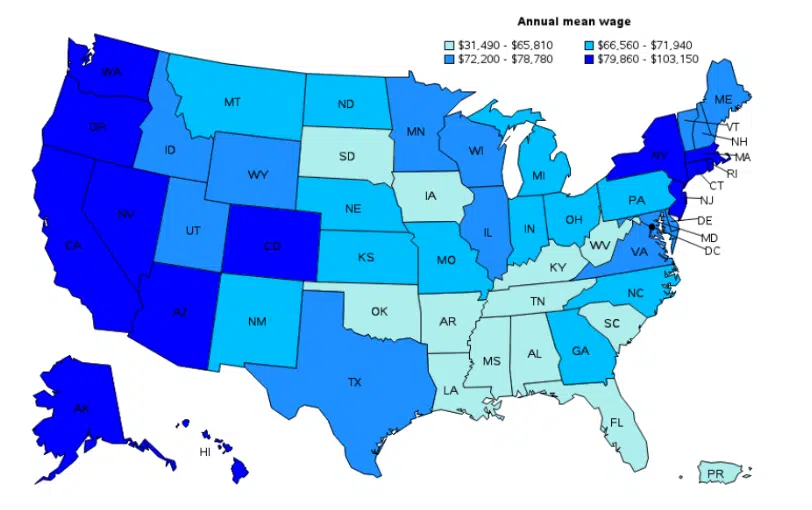
Source: BLS
Partnering with modern platforms to overcome shortages in radiology
Radiology clinics facing workforce gaps must practice structured strategies to overcome staffing shortages and maintain operational stability.
A proactive and results-driven recruiting approach helps clinics reduce time-to-fill while maintaining high standards of patient care.
One vital strategy is to avoid over-dependence on traditional staffing agencies and free job portals. It is said to avoid agencies because they often practise traditional radiology department staffing models.
They will also share details on a limited number of candidates to hire, which may increase overall recruiting costs. Free job boards can pose additional challenges during the hiring process, including high competition, unverified applicants, and delayed candidate engagement.
To overcome these challenges, facilities should partner with modern platforms such as MedSquirrels. This platform provides verified talent, streamlined processes, and greater visibility into workforce availability to address shortages.
Partnering with MedSquirrels is one such bright option. The platform supports hospitals with structured recruitment solutions to attract both contract and full-time staffing needs.
For example, if radiology tech staffing is your requirement, then the process begins when a recruiter partners with MedSquirrels and selects a plan that aligns with their requirements, and the plans are:
- Orange Plan: Full recruitment combined with Employer of Record (EOR) and payrolling services.
- Purple Plan: EOR and payrolling support for facilities that have already sourced a candidate but require HR, payroll, and benefits administration.
- Blue Plan: Recruitment-focused support for hiring full-time clinicians or non-clinicians efficiently and directly.
By implementing these recruitment strategies, dental offices can address both immediate vacancies and long-term workforce needs without relying solely on traditional agency models.
Technology-enabled recruitment improves transparency, accelerates hiring cycles, and supports predictable workforce planning.
Facility owners can book a free demo to evaluate how the platform accelerates the staffing process. Healthcare professionals can also explore open jobs and apply for positions aligned with their qualifications and career goals.
FAQs
How does a radiology workforce shortage impact healthcare facilities?
A shortage directly affects turnaround times, patient satisfaction, and revenue cycles. Delays in imaging services can slow diagnosis and treatment planning. Over time, this may increase staff burnout and operational instability.
What are the biggest recruitment challenges in radiology today?
Facilities often face limited access to qualified candidates, intense market competition, and longer time-to-fill metrics. The radiologic technologist shortage further narrows the available talent pool.
Are flexible staffing models effective in radiology?
Yes. Temporary staffing, contract roles, and temp-to-hire models allow facilities to manage fluctuations in patient demand. These models provide workforce agility without increasing long-term fixed labor costs.
How does MedSquirrels ensure candidate quality?
The platform emphasizes verified professionals and structured screening processes. With this process, recruiters gain access to qualified clinicians and non-clinicians whose credentials align with facility requirements.
Is MedSquirrels suitable for facilities of all sizes?
MedSquirrels is designed to support small clinics, specialty practices, and large hospital systems. Its tiered plans allow organizations to select recruitment support that aligns with their staffing volume, budget, and administrative capacity.

Jani Basha is a healthcare content expert at MedSquirrels, sharing insights on staffing trends, hiring best practices, and career growth.