
The ultimate guide to short-term vs long-term surgical tech staffing
Short-term vs long-term surgical tech staffing is a major consideration for healthcare facilities seeking to ensure operating room efficiency amid workforce challenges. Because workforce planning directly influences surgical throughput, patient safety, and team collaboration, leadership teams must take a proactive approach to resource management. More structured workforce strategies enable organizations to meet current operational demands while supporting long-term clinical goals.
In recent years, facilities have turned to establishing disciplined surgical tech staffing processes to help them find a balance between the flexibility and stability they desire. Workforce shortages, rising labor costs, and credentialing requirements are just a few of the reasons that have made it a much more complicated process than before. Because many decisions involve operational and financial decisions, healthcare leaders must assess which options will best support their continued delivery of high-quality patient care.
Assessing facility needs and case volume
Surgical tech staffing models also play an essential role in aligning staff capacity with surgical need. For institutions with fluctuating case volume, seasonal variation, specialty-specific procedures, as well as scheduling patterns, needs to be considered to fill the workforce quickly. Historical data analysis helps management anticipate areas where shortages may recur.
This analysis helps facilities to fill the required roles quickly and move away from last-minute decisions, and plan their workforce more effectively. By reviewing short-term vs long-term surgical tech staffing, teams can align with real operating room demand instead of relying on assumptions.
- Use historical data to forecast workforce demand.
- Identify departments or specialties with recurring coverage gaps.
Also read: How to quickly fill open positions at your healthcare facility?
Cost and resource considerations
Surgical tech staffing cost plays an important role in workforce planning decisions. Beyond hourly pay, facilities must also account for onboarding, credential verification, and infrastructure-related expenses.
Long-term planning includes retention costs, employee benefits, and ongoing training investments. Reviewing both direct and indirect expenses helps leadership make financially sustainable decisions. A comparison of short-term vs long-term surgical tech staffing enables facilities to balance immediate needs with long-term budget planning.
- Short-term workforce filling can address immediate coverage needs but may involve premium rates.
- Long-term hires require investment but support predictable budgeting and continuity.
Workforce flexibility and retention strategies
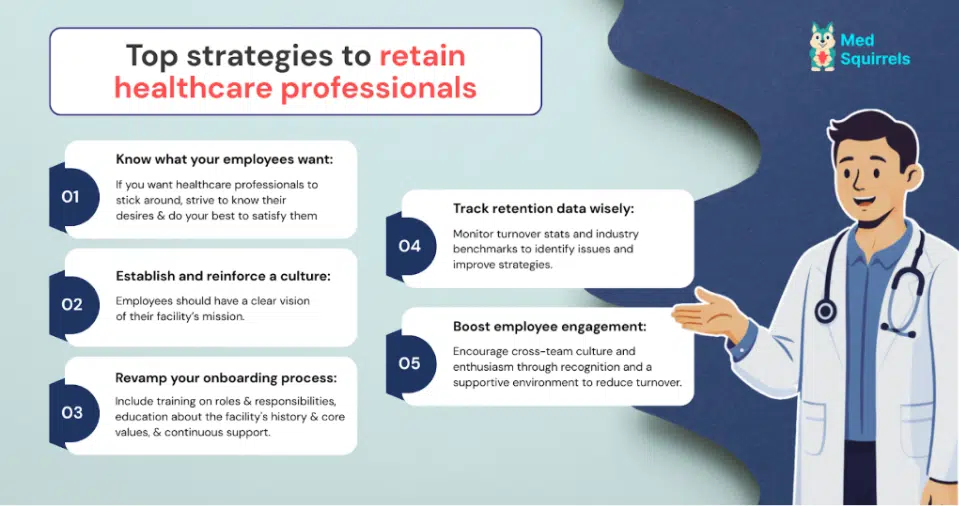
Effective strategies for surgical tech workforce planning should support flexibility without compromising team stability while enabling facilities to quickly fill coverage gaps as they arise. Facilities with fluctuating case volumes benefit from a layered approach that combines full-time staff with additional support when needed. Retention strategies, including cross-training, clear career pathways, and professional development, help reduce burnout and maintain workforce continuity.
A resilient workforce model enables surgical services to react effectively to changing operations, and the constant review of workforce models ensures alignment with current service lines and patient volumes. A detailed infographic has also been added, highlighting key retention strategies facilities can follow to maintain a stable and skilled surgical team.
Effective Healthcare Workforce Retention Strategies
Impact of workforce decisions on facility performance
Surgical tech staffing benefits are primarily realized when the staffing decisions support the facility’s objectives beyond just filling open shifts. From a strategy standpoint, the plan for your workforce will impact how the business expands services, utilizes its operating rooms, and develops future growth strategies as a business.
When workforce structures are aligned with clinical and financial priorities, leadership teams gain access to clearer data and can make more informed, data-driven decisions. This alignment also improves consistency across departments and reduces reliance on a reactive workforce coverage. A thoughtful approach to short-term vs long-term surgical tech staffing supports sustainable performance and enables facilities to scale efficiently as operational demands change.
- Improved OR efficiency and scheduling reliability
- Enhanced staff satisfaction and retention outcomes
Reviewing skills, credentials, and experience
Short-term surgical tech staffing also involves a strong assessment to validate the ability of the candidate to easily transition into the acute care setting.
Effective screening reduces clinical risk and improves teamwork dynamics. A stable quality workforce is assured with standardized skill sets. A stable surgical technician personnel pool, together with personnel development, is a factor for better clinical results. Over time, long-term surgical tech staffing supports consistency in clinical outcomes and operational continuity.
- Temporary staff should have proven experience in the required surgical specialties.
- Long-term staff can be developed for multi-specialty coverage and leadership roles.
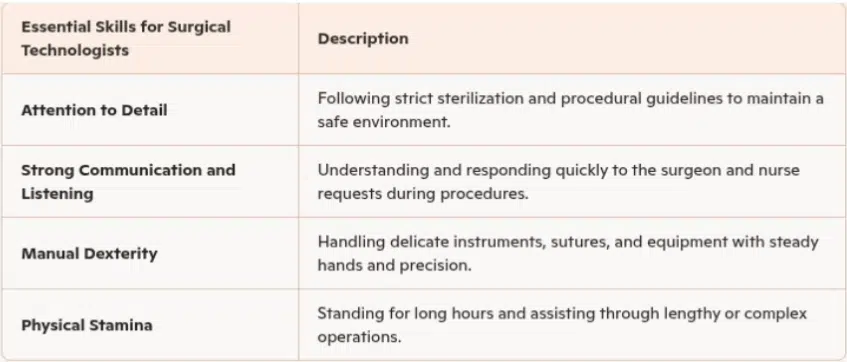
Facilities must be aware of every aspect of the process, whether it may be contract or full-time, and one vital factor is clearly understanding the skills required for each role, such as those needed for a surgical technologist. When recruiters have a precise view of these skill requirements, the process becomes more accurate and efficient. To support this, a detailed infographic is included to simplify skill evaluation and make decisions easier.
Also read: Temporary vs. full-time healthcare staffing: Which option should a facility choose?
Ensuring success in surgical tech staffing with MedSquirrels
Facilities that aim to hire the right surgical technologists must first understand the complete process. Knowing the key steps, from evaluating case volume, skill requirements, and credentialing to planning workforce coverage, completes half of the journey. The remaining success, however, depends heavily on selecting the right platform to execute the process efficiently and reliably.
Traditional agencies often fall short, presenting limitations such as slow candidate turnaround, rigid contracts, and limited transparency. These challenges can delay workforce placement, increase administrative burdens, and create gaps in operating room coverage. Evaluating surgical tech staffing cost alongside these risks helps leadership teams make informed, strategic choices.
To overcome these obstacles, choosing MedSquirrels is a better option. Partnering with this platform gives facilities access to verified, qualified surgical technologists while reducing administrative complexity. This platform also offers affordable plans, such as.
Orange Plan: Recruitment plus EOR/Payrolling, helping you hire contract clinicians or non-clinicians while managing HR, payroll, compliance, and benefits.
Purple Plan: EOR/Payrolling support when you already have a candidate and need HR, payroll, and benefits management.
Blue Plan: Recruitment-focused support to help you hire full-time clinicians or non-clinicians efficiently.
By leveraging MedSquirrels, facilities can unlock surgical tech staffing benefits, ensure operational continuity, and address both immediate and long-term workforce needs efficiently. The platform provides better visibility into workforce availability, reduces reliance on traditional sourcing methods, and supports more predictable scheduling outcomes. Recruiters and facilities can book a free demo to see how our platform supports smarter and faster decisions. Healthcare professionals can browse open jobs and apply for those jobs that fit with their skills.
FAQs
What is the difference between short-term and long-term surgical tech staffing?
Short-term surgical technologist workforce support involves engaging temporary or contract professionals to address immediate needs, seasonal increases, or unexpected absences. Long-term workforce planning focuses on full-time team members who deliver consistent coverage, build institutional knowledge, and provide stability within operating room teams.
What are the key benefits of strategic surgical tech staffing?
Proper workforce planning improves efficiency, reduces clinician burnout, ensures compliance, and strengthens patient safety. Aligning workforce planning with operational goals also supports cost control and long-term scalability.
What role can long-term surgical tech staffing play in workforce planning?
Long-term hires provide continuity, institutional knowledge, and leadership potential. They help maintain consistent performance and reduce the risks associated with frequent staff turnover in the facility.
How can healthcare facilities get started with MedSquirrels?
Facilities can book a free demo to explore available plans and understand how the platform supports their workforce goals. The demo also provides a clear view of how MedSquirrels streamlines workforce staffing, improves visibility into available talent, and helps facilities make faster decisions.
Can MedSquirrels support compliance and credential verification?
Yes. MedSquirrels ensures that all candidates are properly credentialed and compliant with regulatory standards. Facilities gain greater confidence in workforce quality while reducing risks associated with manual verification processes.

Suresh writes about healthcare staffing and industry insights for MedSquirrels, helping professionals and facilities navigate hiring needs.