
3 creative recruitment strategies to solve school nurse shortage
Recruiting a skilled school nurse might sound easy. But for recruiters, filling these roles can be challenging when qualified candidates are in short supply.
Schools need certified nurses who can respond to students’health needs.
As a recruiter, to overcome these challenges, you may also consider candidates from nursing schools when evaluating qualified applicants.
This blog explains more proven recruitment strategies to help recruiters search for and onboard qualified school nurses faster.
Rising demand for full-time school nurses
Modern-day schools are taking quality measures related to student health. These measures are making the role of a school nurse more important than ever.
As the healthcare needs grow, schools are finding it challenging to hire nursing staff with the necessary skills.
The following factors are driving the growing demand:
- In recent times, there has been a rise in student health needs
- Growing nurse shortages with skills.
- Increasing healthcare responsibilities in schools
It is important for you as a recruiter to understand these factors, which can make it easier to overcome the nursing shortage.
A detailed infographic can further support understanding by visually outlining demand drivers, skill gaps, and workforce planning considerations.
Key skills every effective school nurse should possess
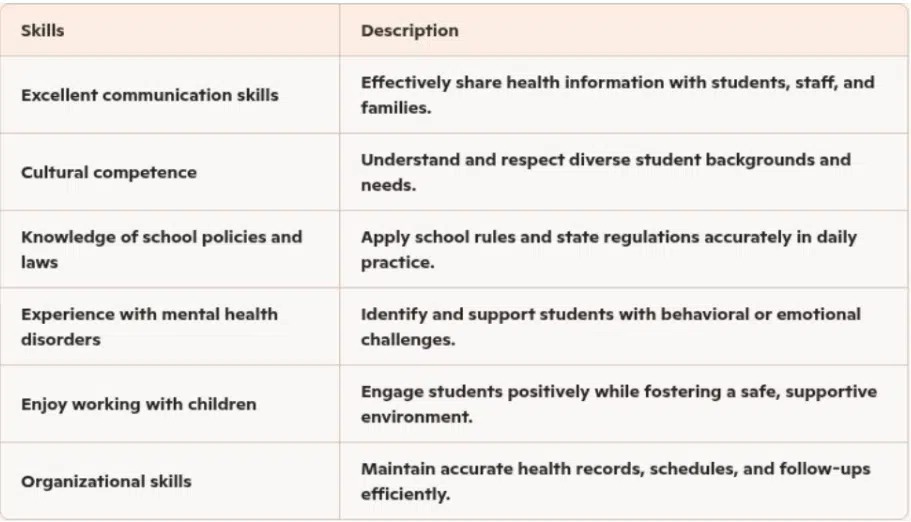
Source: www.ahu.edu
Strategy 1: Partner with nursing schools
Partnerships with nursing school programs remain one of the most effective ways to build a long-term recruitment pipeline.
However, many schools face workforce supply challenges because school-based nursing receives limited attention in traditional nursing education.
It limits early awareness of the role among nursing graduates. This gap contributes to fewer qualified candidates entering school health roles.
Schools can collaborate with local institutions to introduce students to school-based nursing roles early in their education.
These partnerships also help establish shared expectations related to training and readiness before placement.
Top ways schools can strengthen partnerships:
- Offer clinical rotations or observation opportunities in school settings
- Participate in campus recruitment sessions
- Provide mentorship opportunities with experienced school staff
- Partner with nursing schools to decide what students should know before starting school nursing.
The above options give you more ways to partner with nursing schools.
Strategy 2: Leverage flexible workforce models
When recruiting is planned well, with flexible workforce models, it improves nurse staffing coverage while maintaining consistency and care standards.
They also help schools respond to staff absences, changing student health needs, and workload demands. This helps schools meet required nursing and regulatory standards.
In addition, flexible models support the recruitment and retention of experienced nurses. They offer schedules that align with both professional and personal needs.
This flexibility further supports better planning during absences, such as vacations. It also helps during peak workload periods, including seasonal or holiday demand.
Flexible options that support coverage:
- Shared coverage across multiple schools
- Part-time or reduced-hour roles
- Short-term assignments during peak demand periods
Together, these options help schools maintain reliable nurse coverage while adapting to changing staffing needs
Strategy 3: Strengthen retention-focused recruitment
As a recruiter, you must make sure that your outreach strategies clearly explain why school-based roles are stable for professional growth.
This is especially important when you are engaging with graduates from nursing schools.
When talking to candidates, highlight:
- This role has predictable schedules
- It is feasible to manage workloads
- Long-term role sustainability in the healthcare sector
Clearly defined nurse requirements can help reduce early turnover. Healthcare managers must also understand that recruitment efforts are most effective when aligned with retention planning.
By maintaining planned retention strategies, recruiters can build stronger teams.
Effective retention approaches include:
- Clear role expectations and balanced workloads
- Access to ongoing training and professional development
- Supportive leadership and collaborative work environments
This is especially important when you are engaging with graduates from a nursing school.
How expanding school nurse responsibilities impacts recruitment and retention
School nurse workforce trends show that responsibilities now extend far beyond basic first aid.
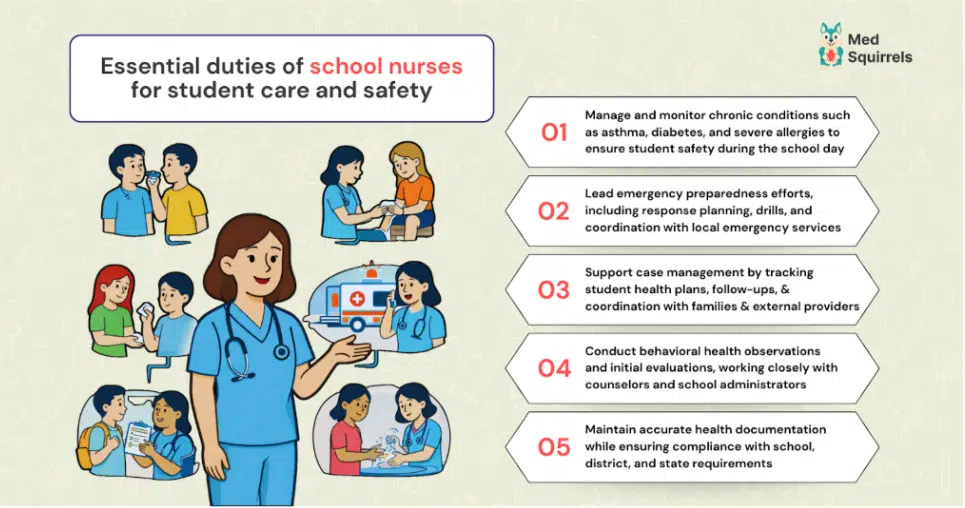
School nurses support behavioral health monitoring, chronic disease management, and emergency response planning and preparedness.
The expanding scope of school nursing now includes responsibilities such as:
- Collaboration with teachers, counselors, and administrators has become routine.
- When planning workforce coverage, schools must clearly outline responsibilities in the job description to improve role clarity.
- As responsibilities expand, schools must also plan for appropriate training and clear role definitions.
These points and a clear job description help schools plan for future staffing needs and maintain consistent care
A detailed infographic highlights the key responsibilities to include in school nurse job descriptions.
Core duties of school nurses in promoting student health
How to strengthen nurse staffing with modern platforms
Schools that need to bring qualified nurses on board must stay informed about current market dynamics and evolving school nurse workforce trends.
Understanding these trends makes it easier for administrators to plan, attract the right candidates, and streamline onboarding timelines.
However, awareness alone will not eliminate workforce challenges, as recruiting delays, credential verification, and coverage gaps often require more structured support.
Relying on traditional agencies can create limitations such as:
- High placement costs that increase staffing expenses
- Slow turnaround times that delay hiring
- Limited transparency into candidate availability
- Rigid contracts that reduce long-term staffing flexibility
These constraints often add administrative burden without solving core workforce needs.
To overcome these limitations, partnering with a modern staffing platform such as MedSquirrels is a better option.
This modern staffing platform offers a more efficient and cost-conscious approach. It also offers affordable staffing plans that are designed to support schools at different stages of workforce planning.
Recruiters can request a free demo to see how the platform simplifies workforce planning and placement from start to finish. Nurses can also explore open jobs and apply for opportunities that align with their skills and long-term nursing career goals.
FAQs
What should recruiters highlight when hiring school nurses?
Recruiters should highlight predictable schedules, professional growth, and a stable work environment. They should also explain the role’s responsibilities clearly so candidates know what to expect.
Can recent nursing graduates be considered for school nurse roles?
Yes, qualified nursing graduates can be considered if they meet the required licensing and certification standards. Recruiters can also provide role-specific training and mentorship to support their transition into school nursing.
What should recruiters highlight when hiring school nurses?
Recruiters should highlight predictable schedules, professional growth, and a stable work environment. They should also explain the role’s responsibilities clearly so candidates know what to expect.
Can MedSquirrels help schools find qualified nurses?
Yes. Schools can use MedSquirrels to support their search for qualified nursing professionals. This can be useful when traditional recruitment methods are not producing enough suitable candidates.
How does MedSquirrels support nurse credentialing?
Credentialing is an important part of healthcare staffing because nurses must meet required professional standards. MedSquirrels supports the credentialing process as part of its overall staffing workflow.

Siddharth is a Content Specialist at MedSquirrels, where he produces research-backed content covering healthcare staffing, workforce management, healthcare recruitment, and HR technology. His work includes SEO-focused articles, in-depth case studies, industry analysis, and practical resources designed to help healthcare clinics strengthen hiring strategies, streamline workforce planning, and keep pace with changing industry developments