
Overcoming talent shortages in the MRI Tech field
Advancements in healthcare technology have significantly increased demand for MRI tech professionals in recent years. As a result, the MRI technologist shortage has become a growing concern across many facilities. As the healthcare field transitions towards a more patient-centered practice, personalized treatments are designed based on the prognosis of critical conditions.
To enable this transition, advancements in imaging technologies are enabling the precise diagnosis of ailments. Magnetic resonance imaging (MRI) technology has become a popular tool for diagnosing and treating a wide range of chronic diseases affecting internal organs. As physicians rely on these MRI reports to customize treatment programs and track improvement, the demand for medical resonance imaging technology has grown.
This pressing demand for MRI imaging has significantly contributed to the demand for qualified MRI technologists in healthcare facilities, further highlighting the challenges related to the MRI technologist shortage. In this blog, we will cover solutions to the question of how to overcome the talent shortage in the MRI tech field.
Understanding the low supply of MRI technologists
In this modern era, the MRI technologist shortage is a significant issue that can compromise patient care and the facility’s reputation. To overcome talent shortages in the MRI tech field, it is essential to understand the causes of these shortages and how they are impacting the healthcare facility as a whole.
The primary factor contributing to the MRI technologist shortage is the inability to fill vacant positions due to attrition among burned-out staff. As the number of aging baby boomers in the USA increases, patient visits in healthcare facilities have risen significantly, creating a considerable workload for health professionals.
This massive workload on MRI technologists, along with poor working conditions, can create enormous stress, leading to their exit from the workforce. This has also led many facilities to ask whether MRI technicians are in demand and how this growing pressure contributes to MRI tech burnout across the workforce.
The facility’s inability to meet the demand for adequate MRI technologists will burden existing staff, potentially delaying diagnoses and affecting the quality of care provided. Staffing shortages can also lead to inefficient shift scheduling, negatively impacting the facility’s operational efficiency.
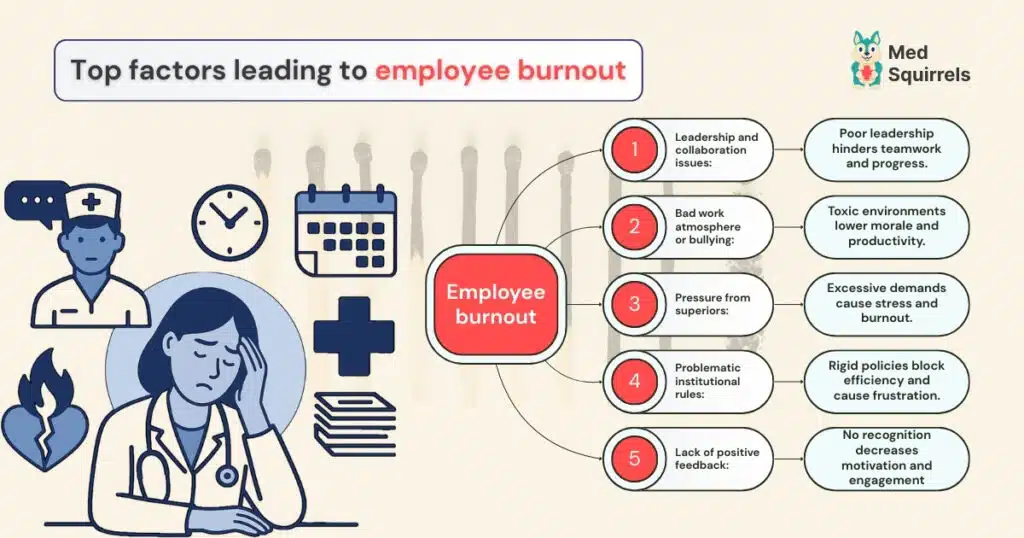
As more facilities experience these challenges, they continue to explore whether MRI techs are in demand and whether there is a shortage in their regions. To reduce MRI tech burnout, recruiters must first understand the key factors that contribute to it, from workload pressures to inadequate staffing support. A detailed infographic is provided to help you clearly identify these burnout drivers so you can proactively address them and prevent future workforce fatigue.
Major Factors Contributing to Employee Burnout
Different ways to tackle MRI technologist talent shortages
By implementing effective strategies to recruit, train, and retain MRI technologists in your facility, you can address the MRI technology talent shortage, manage the growing demand for MRI services, and enhance overall patient care.
Given below are some steps that can be taken to overcome talent shortages in the MRI tech field. Many of these steps align with broader strategies to overcome MRI technologist shortages designed to strengthen overall workforce stability:
Enhancing recruitment strategies for MRI technicians
- To address the MRI technologist shortage at your facility, a detailed analysis of staffing requirements and gaps is needed. It is also important to understand the MRI tech staffing industry and to have insights into the latest advancements and challenges in MRI tech hiring. Strengthening your process with targeted MRI technologist recruitment strategies can improve candidate flow.
- It is essential to promote the MRI technologist job vacancy at your facility across job portals, social media, and professional networks to reach potential candidates. While advertising MRI tech positions, ensure you include all the details about the role and what it would be like to work in your facility. You can consider asking your existing staff for help to better understand this. These efforts also help address concerns about overcoming the talent shortage in MRI departments.
- Hiring an MRI tech who is functionally and culturally fit for the role in your facility can be challenging. However, building a strong employer brand by fostering a positive work culture, promoting work-life balance, and offering competitive salaries and career growth opportunities can help you distinguish your facility from others and attract talented candidates. Establishing a strong value proposition also supports long-term MRI technologist retention.
- It is also an efficient way to secure referrals from your existing staff for talented MRI technologists to hire for your facility. You can promote this by providing referral rewards and bonuses for successful referrals. This improves employee engagement in the recruitment process and reduces the burdensome administrative tasks. A structured referral initiative also enhances your internal MRI tech staffing capabilities.
- The best way to hire MRI technologists is through collaboration with various organizations. If your facility does not require experienced MRI tech professionals, you can collaborate with MRI tech training institutes to hire newly graduated candidates. For experienced MRI technologists seeking employment, you can partner with a reputable MRI staffing solutions provider to streamline the process.
Improving retention and job satisfaction
- To retain your facility’s existing staff, you must focus on strategies that address the problems they face and ensure a satisfactory work experience. To identify these challenges, roll out surveys and employee well-being groups to understand areas for improvement within your facility and proactively address them.
- Lay down a clear career progression pathway and offer career advancement opportunities to your existing staff. Clearly communicate the goals and milestones they must achieve to progress in their careers. It is also essential to review your staff’s performance regularly and provide constructive feedback to support improvement. Clear pathways also strengthen broader organizational goals for overcoming talent shortages in high-demand departments.
- Provide opportunities for your existing MRI technologists to upskill, as the field of MRI technology continues to evolve. Encourage existing staff to take specialization certifications and undergo training. Implement mentorship programs for newly recruited MRI technologists, pairing experienced MRI technologists with new hires to offer guidance, support, and career advice. This can help new staff have a positive onboarding experience. Moreover, you can also consider providing cross-training opportunities to the existing staff to advance their skill sets.
- To reduce staff burnout issues, you can use advanced resource management tools to optimize workforce utilization. These tools can schedule shifts efficiently by tracking the workload, working hours, leaves, and staff availability. This supports reducing MRI tech burnout while improving efficiency.
- Nowadays, professionals do not rely solely on salary to work at a facility long-term. To improve the employee experience in the long run, you must craft a comprehensive benefits plan that includes additional perks such as paid time off, flexible shifts, and vacation, along with a competitive salary aligned with industry standards.
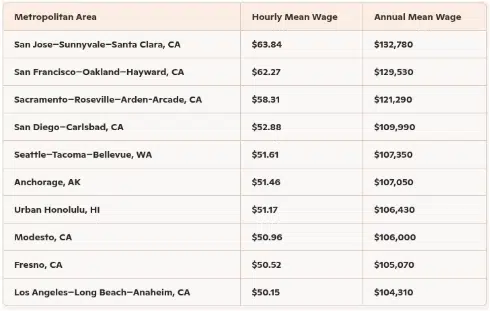
- To offer competitive pay, your facility must understand national pay structures, which will help you set fair and informed compensation levels. To get a detailed understanding of how compensation is structured across different regions, a comprehensive infographic is provided for better clarity.
Top-paying metropolitan areas for MRI technologists in the USA
Ensuring diversity and inclusion in MRI tech hiring
- Having a diverse and inclusive workforce can enhance team dynamics and reduce staff attrition. Hence, it is essential to have a well-defined D&I policy in place at your facility and to incorporate it into your staffing strategies. This includes creating a safe and supportive work environment where everyone feels heard and recognized.
- Having diverse interviewers on the panel helps reduce unconscious bias that might cause qualified candidates to be overlooked because of their background. Structuring the interview process and using standardized rating criteria further strengthen fairness, which is especially important as many facilities now ask, Are MRI techs in demand? while competing for skilled talent.
- When hiring MRI technologists from diverse backgrounds, it is vital to train your existing staff on the facility’s D&I policies to foster an inclusive work environment. You can also support various D&I networks and activities in your facility to advocate for this.
- Ensuring culture fit is also as important as ensuring diversity. Keeping a check on the culture fit of MRI technologists hired to ensure they align with the facility’s values and goals can help retain staff in the long run.
Efficient MRI technologist staffing with MedSquirrels
With proper planning and the right strategies, you can efficiently navigate MRI tech hiring and retain your facility’s existing experienced workforce. As we have seen, the huge demand for talented MRI technologists is driven by a combination of factors, including staff shortages stemming from employee burnout and an increased focus on preventive care. By proactively understanding staff demand trends through technology, facilities can swiftly overcome talent shortages in the MRI tech field. If you are looking for a platform that can streamline all your MRI tech hiring needs, MedSquirrels is the right fit.
MedSquirrels is an all-in-one MRI technologist staffing platform that can help you create specific job descriptions, source candidates, interview them, perform credentialing and compliance checks, onboard, and handle payroll and benefits administration.
With the AI-enabled platform, facilities can hire MRI technologists quickly and cost-effectively. Based on your MRI technologist’s hiring requirements, you can select one of our platform’s hiring plans.
For instance, when you choose the Orange Plan, our platform will recruit a contractor based on your job description and assume the employer’s responsibilities, such as payroll, while ensuring compliance and zero risk to your facility. For more details, including pricing. You can request a demo to see how MedSquirrels’ platform helps you fulfill your MRI tech hiring requirements.
FAQ's
Is there a shortage of MRI techs?
Yes, there is a growing shortage of MRI technicians in many regions of the USA. The increasing number of imaging procedures, combined with a limited number of qualified professionals, has created a competitive market where healthcare facilities must offer attractive compensation and career growth opportunities to hire and retain skilled MRI techs
Why are MRI technicians in demand?
MRI technicians are in high demand as the reliance on advanced imaging for diagnosis and treatment increases. Hospitals and outpatient facilities are seeking skilled technicians to operate MRI equipment efficiently and support patient care, making this role crucial in modern medical services.
What steps can a facility take to improve MRI tech retention?
Facilities can strengthen MRI technologist retention by offering clear career paths, competitive salaries, structured mentorship, and better work-life balance. Addressing burnout and workload distribution is also essential.
How does MedSquirrels simplify MRI technologist staffing for healthcare facilities?
MedSquirrels streamlines the entire MRI technologist recruitment process by helping facilities create accurate job descriptions, source qualified candidates, manage interviews, and complete credentialing, all through a centralized, AI-enabled platform.
What makes MedSquirrels a cost-effective partner for MRI technologist hiring?
MedSquirrels offers transparent pricing with no hidden markups. By automating key steps such as credentialing and compliance, the platform reduces administrative burden and accelerates time-to-hire, saving facilities time and money.

Jani Basha is a Content Specialist at MedSquirrels, specializing in SEO-driven content related to healthcare staffing, recruitment, workforce management, and HR technology. He creates informative articles, case studies, and thought leadership content. His work enables healthcare facilities to enhance recruitment efforts, build effective workforce strategies, and stay current with emerging trends in healthcare recruitment.