
The complete guide to healthcare staffing in the US
Healthcare facilities across the United States face ongoing challenges, including workforce shortages, regulatory requirements, and the need to maintain high-quality patient care. The blog offers a practical framework for facilities to manage their workforce efficiently.
Understanding this process enables recruiters to minimize operational delays, enhance care quality, and plan for future workforce needs. Using this blog, facilities can address the whole process, from planning clinician needs to ensuring compliance and effectively managing operational systems.
Guide 1: Understanding the U.S. healthcare staffing ecosystem
Healthcare staffing encompasses strategies for training and deploying qualified personnel. This includes a plan for training and deploying qualified personnel. The healthcare system relies on clinical personnel roles such as registered nurses, allied health professionals such as physical therapists, and non-clinical personnel to maintain high-quality patient care and maximize operational efficiency.
This guide explains how an effective plan positively affects patient outcomes and facility operations. A well-managed system promotes continuity of care while minimizing administrative burden.
Workforce categories include:
- Clinical professionals, including physicians and nurses
- Allied health professionals, such as therapists and lab technicians
- Non-clinical staff managing administration and operations
- Verify candidate skills and certifications before onboarding
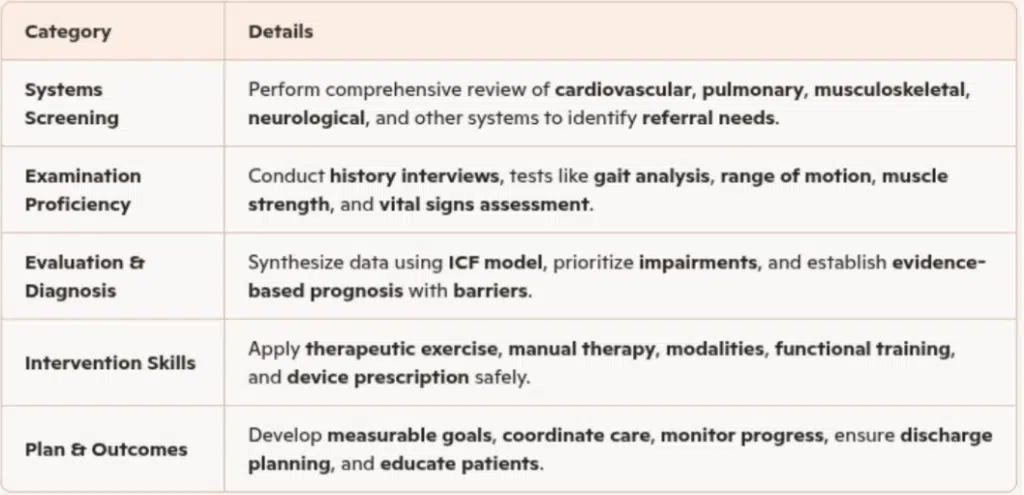
Facilities must clearly understand the specific clinical skills and credentials required for each position. To support this, a detailed infographic outlines the key competencies to evaluate for positions such as physical therapist, helping teams make more confident, consistent decisions.
Essential PT graduate skills for healthcare employers
Source: www.apta.org
Guide 2: Selecting the right staffing models
Facilities need to select the suitable model that best balances operational efficiency and workforce flexibility for their facility. Facilities rely on different approaches, including full-time, contract, and temporary options, to meet varying operational demands outlined in the healthcare staffing guide.
Long-term stability and team continuity are achieved through contract and full-time roles within facilities, helping recruiters better control healthcare labor costs while maintaining care quality. When patient volumes increase, facilities often turn to flexible clinical support options to address immediate care demands.
In such situations, if a facility needs a nursing professional, they look to travel nurse staffing, which is typically on a contract basis and used to maintain coverage during peak periods without adding long-term labor commitments. Contract, temporary, and per diem roles provide flexibility while maintaining care quality and operational control.
Other assignment models include:
- Travel healthcare assignments
- Locum tenens roles
- Specialty support for allied health services
Also read: Temporary vs. full-time healthcare staffing: which option should a facility choose?
Guide 3: Navigating compliance, licensing, and credentialing
Managing healthcare roles in the U.S. requires significant effort to comply with state and federal laws and regulations. Each state has its own licensing process, and every facility must ensure that its staff meet the state’s requirements.
Verifying credentials and properly onboarding staff are essential for compliance and workforce readiness, as outlined in the healthcare staffing guide. Utilizing modern platforms rather than traditional healthcare agencies enables facilities to manage the many regulatory complexities while reducing the time and effort spent on administrative tasks.
In addition, facilities and recruiters must comply with federal employment laws to avoid fines and other penalties for violations.
Guide 4: Building an efficient workforce planning process
To plan effectively for a facility’s workforce needs, facilities must identify required roles and anticipate potential shortages. A key component of a healthcare staffing guide is aligning strategies with both patient care priorities and operational requirements.
By implementing streamlined recruitment processes, facilities have quicker access to applicants, allowing them to fill open positions more quickly and reducing the time workflow is interrupted when a vacancy exists. Proactive healthcare workforce management enables facilities to distribute workloads among employees evenly and provides a more effective means of managing their workforce across multiple departments.
Key steps in workforce planning:
- Identifying the facility’s needs early
- Managing recruitment efficiently
- Optimizing scheduling and utilization
- Reducing turnover through proactive planning
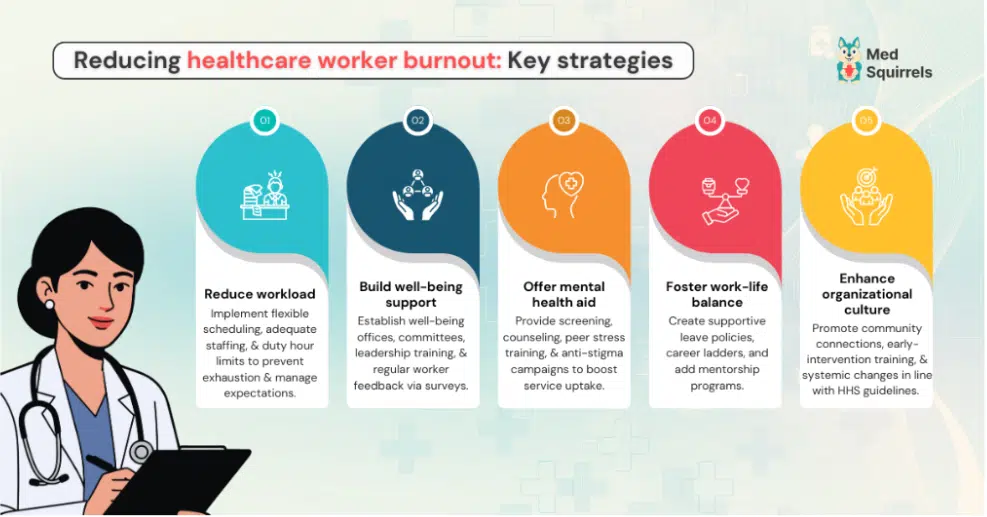
Reducing turnover significantly benefits a facility by strengthening workforce stability, improving care continuity, and controlling costs. To support better understanding, a detailed infographic is included that highlights the tips clinics and facilities should follow to minimize turnover rates effectively.
Key strategies for reducing healthcare worker burnout
Guide 5: Optimizing healthcare staffing with data and technology
Healthcare staffing benefits significantly from the daily data generated within facilities. This information supports stronger workforce decision-making and improves operational efficiency, as outlined in this guide. By analyzing this data, facilities can better anticipate demand and allocate resources more effectively.
Allied health and nursing needs can also be managed more efficiently through digital systems that support coordination and placement. For example, when a facility needs to hire a physical therapist, these systems help streamline scheduling, documentation, and communication, ensuring continuity of care.
Key benefits of using the technology:
- Taking faster decisions
- Improved accuracy in credential verification
- Enhanced scheduling and resource allocation
Also read: The transformative impact of technology on healthcare staffing
Partnering with a modern staffing platform
Facilities must understand the whole process and the supporting guides to ensure they meet workforce expectations and operational requirements. By following a structured approach, organizations can optimize recruitment timelines, improve staff allocation, reduce turnover, and maintain high standards of patient care.
To meet these expectations effectively, partnering with a comprehensive platform is essential. Platforms like MedSquirrels streamline the entire lifecycle, handling workforce solutions from candidate sourcing and credential verification to onboarding, payroll, and benefits management.
Facilities can choose cost-effective plans such as the Orange Plan, which manages full HR, payroll, and benefits for contractors; the Purple Plan, designed to onboard pre-selected talent while handling HR and payroll; and the Blue Plan, which provides end-to-end recruitment services for full-time clinicians or non-clinicians.
By choosing MedSquirrels, facilities can move beyond the challenges posed by traditional agencies and access a more efficient, reliable approach that emphasizes confidence, transparency, and consistency. Book a demo today to see how our platform supports smarter, faster decisions. Healthcare professionals can browse open jobs and apply for those jobs that align with their professional goals.
FAQs
Why is understanding the U.S. healthcare talent landscape important for facilities?
A clear understanding of the U.S. healthcare talent landscape helps facilities anticipate talent shortages, plan role availability across departments, and meet state and federal compliance requirements. It also supports more accurate forecasting of patient demand and service capacity.
What are the main types of healthcare professional staffing?
The main types include permanent, full-time employees; contract staff; temporary staff; and locum tenens or travel healthcare personnel. Choosing the right type helps facilities balance cost, flexibility, and quality of care.
What are current healthcare staffing trends?
The key trends include the increasing use of flexible models, digital workforce management tools, and data-driven recruitment strategies. Facilities are also investing in training to retain skilled professionals.
How does MedSquirrels streamline healthcare staffing for facilities?
MedSquirrels provides an all-in-one platform that handles candidate sourcing, credential verification, onboarding, payroll, and benefits management. This allows facilities to reduce administrative workload and focus on delivering quality patient care.
How does MedSquirrels ensure candidate quality and compliance?
All professionals are pre-screened, verified for credentials, and assessed for relevant experience before joining the facility. MedSquirrels manages regulatory requirements and ensures ongoing compliance, onboarding, and integration of professionals into operational roles.

Jani Basha is a healthcare content expert at MedSquirrels, sharing insights on staffing trends, hiring best practices, and career growth.