
Strategies to hire medical assistants and retain them

The role of medical assistants is demanding, as they handle a broad range of clinical and administrative duties in a facility. Hospitals looking to hire medical assistants must understand the challenges of workload, burnout, and retention.
Medical assistant duties often require a full-time commitment, including working various shifts, especially during holidays. The heavy workload associated with these responsibilities can lead to stress and burnout. The workload has increased, particularly since the COVID-19 pandemic, due to a surge in preventive care visits.
This blog outlines the recruitment strategies, including training and retention, to overcome shortages of skilled medical assistants.
Trends and implications of hiring medical assistants
The healthcare sector is changing rapidly due to technological advancements and evolving care delivery models. It is essential for healthcare facilities to understand these trends to hire and retain skilled medical assistants in line with demand. The following are some key trends in the medical assistant field and their implications for hiring practices.
- Technological advancements in data management and storage have increased the use of electronic health record systems, creating a demand for recruiting medical assistants experienced in these tools.
- Telemedicine has become a major trend in the medical field after the COVID-19 pandemic. Hence, it is essential to hire medical assistants who can manage patients remotely and work with telemedicine platforms.
- Workforce dynamics in healthcare have shifted toward prioritizing work-life balance. As a result, many facilities will prefer to hire medical assistants who can work flexible shifts.
- Diversity, inclusiveness, and culture fit are important factors in employee well-being. Due to rising burnout among healthcare workers, facilities must prioritize these elements while hiring medical assistants.
- Facilities should focus on upskilling through continued education to meet the growing demand for skilled professionals. When you plan to hire medical assistants, ensure candidates value continuous learning and professional development.
Hiring medical assistants: Legal and regulatory considerations
Medical assistants have specific legal and regulatory considerations, as do other medical professionals. The state where your facility is located has the right to set its own practice guidelines. Understanding these regulatory guidelines while you create a detailed job description is the first step towards navigating legal implications that may arise.
Below are some legal considerations to be followed by you as a recruiter when you want to hire medical assistants:
- Always check whether the medical assistant hired is licensed to practice in the state.
- Verify the credentials of the candidate before onboarding
- Ensure their license is active and valid throughout their employment.
- Cross-check other state employment laws, if any, to avoid compliance issues.
- Conduct thorough background verification for any pending criminal records/charges.
- Conduct pre-employment medical screening without fail.
- Provide a detailed list of job duties in the medical assistant job description, in the interview, and in the offer letter.
A detailed infographic is added for the top responsibilities to add in a job description.
Top responsibilities of a Medical Assistant
Medical assistant responsibilities | Description |
Record patient medical histories and vital signs | Maintain accurate patient information and support clinical assessments |
Prepare patients and exam rooms for procedures | Ensure patients and treatment areas are ready for examinations |
Manage electronic health records and documentation | Update and organize patient records within EHR systems |
Schedule appointments and coordinate patient communication | Handle appointment scheduling and patient interactions efficiently |
Assist physicians during examinations and clinical procedures | Provide clinical support during patient care and treatments |
source: concorde.edu
Training strategies for medical assistants: A guide for employers
Recruiting recently graduated medical assistants is an effective way to address the staffing gaps at your facility. Although new medical assistants may lack practical experience, they can be mentored to work efficiently. Facilities must adopt a structured approach to staffing, onboarding, and training.
A well-crafted medical assistant training plan can be created by defining objectives and an orientation timeline to strengthen medical assistant skills. Orientation can cover work culture, clinical tasks, administrative procedures, and customer service, each of which is detailed below.
- Organizational culture orientation: Introduce the facility’s values and workplace culture to align entry-level medical assistants with its mission and vision
- Clinical training: Provide hands-on clinical and electronic health record training to complement medical assistant programs.
- Administrative training: Create medical assistant programs to cover administrative procedures, such as appointment scheduling, billing, insurance claims, and customer service
After the required orientations, integrate entry-level candidates into the team by allowing them to assist experienced professionals and monitoring their progress through constructive feedback.
This helps new graduates understand medical assistant duties in clinical and administrative settings while enabling employers to manage staffing demands effectively
Long-term retention strategies to be followed
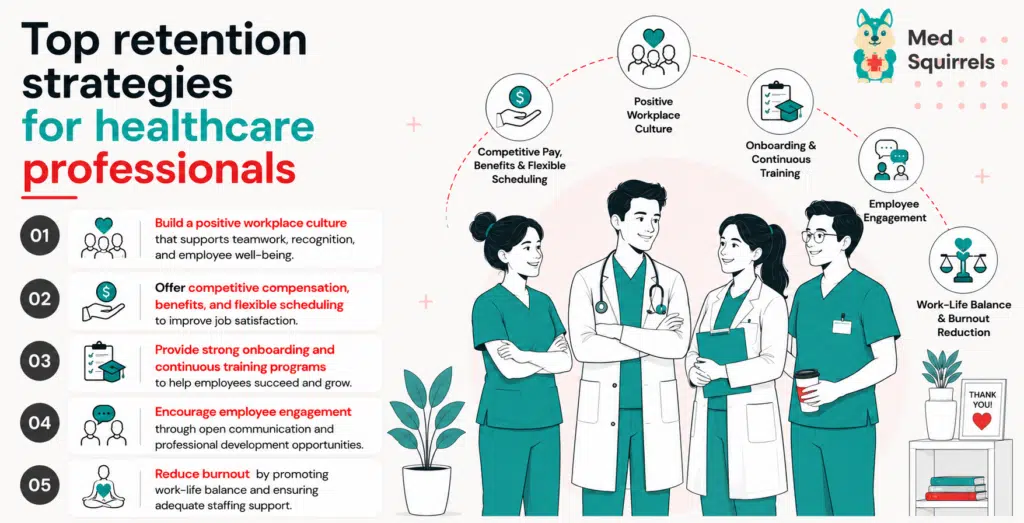
In the current healthcare staffing landscape, more emphasis should be placed on retention than on recruiting. By developing effective strategies, facilities can reduce the need for new medical assistant staffing by retaining existing staff. Here are some strategies you can follow to build a loyal team by retaining medical assistants in your facility:
- Research the medical assistant career outlook and ensure fair compensation aligned with market standards.
- Implement additional perks, such as career progression paths and vacation policies, alongside salary and health benefits.
- Offer flexible working options and rotatable shifts.
- Review staff workloads at regular intervals to prevent medical assistant burnout.
- Provide clear career progression pathways for professional development.
- Offer cross-training opportunities to advance the medical assistant skill sets.
- Establish regular performance reviews and reward cycles for employee recognition.
- Ensure the staff is aligned with your culture to reduce medical assistant turnover rates.
- Foster a safe and supportive work environment where nobody feels left out.
Effective retention strategies in healthcare
How to overcome staffing shortages with a modern platform
The diverse role of an M.A. is highly valuable to facilities. By adopting the above recruitment strategies and retention policies, facilities can reduce medical assistant staffing shortages. Understanding your facility’s needs is essential. To efficiently implement these strategies, consider partnering with MedSquirrels
It is an all-in-one healthcare staffing platform that helps you hire medical assistants with the skills and experience you need.MedSquirrels will leverage AI to submit curated profiles for your job opening.
Our platform comes with affordable staffing plans that also include onboarding and credentialing, payroll, and compliance for your facility.
Recruiters can book a free demo to see how the platform makes staffing easy. Professionals can also check open jobs and apply for those that match their skills.
FAQs
What are the key medical assistant qualifications to be checked as a recruiter?
You should verify candidates’ educational backgrounds, certifications, state-specific requirements, relevant training, and prior healthcare experience before onboarding.
Why are medical assistant certifications important during the recruiting process?
Certifications help recruiters evaluate a candidate’s professional training, clinical knowledge, and readiness to perform healthcare responsibilities efficiently.
What legal considerations should facilities take into account when staffing?
Facilities should verify credentials, conduct background checks, comply with state regulations, and ensure licenses or certifications remain valid throughout employment.
What types of healthcare facilities can use MedSquirrels?
MedSquirrels supports hospitals and clinics of different sizes, including pharmacies, outpatient clinics, rehabilitation centers, and specialty care facilities.
How does MedSquirrels simplify the healthcare recruitment process?
MedSquirrels streamlines candidate sourcing, profile screening, onboarding, payroll support, and compliance management within a single healthcare staffing solution

Jani Basha is a Content Specialist with a background in healthcare content development, recruitment, and workforce management. His work focuses on the challenges healthcare facilities face in attracting, staffing, and managing clinical and non-clinical professionals. He develops content on healthcare recruitment, workforce trends, and staffing strategies. His work translates complex workforce topics into practical insights for healthcare recruiters. His work aligns with MedSquirrels’ mission to make healthcare staffing more efficient and cost-effective through technology-driven workforce solutions.