
Nurse practitioner staffing trends in the USA: What employers need to know
The healthcare industry is facing nurse practitioner staffing challenges across the nation. This staffing shortage has grown in recent times specially post COVID and there are many reasons for this. They are growing knowledge of personal healthcare, affordable healthcare insurance, and an increased number of Healthcare facilities.
Nurse practitioner roles are a crucial part of the clinics and one of the largest categories of the healthcare workforce. They are responsible for providing crucial patient care, and doctors also rely on these professionals on a daily basis to enhance patient care.
Healthcare owners must understand that a lack of a nurse practitioner workforce clearly impacts patient care at their facility. Along with this, not maintaining adequate workforce levels may lead to inadequate staffing, which is associated with higher readmissions, infection rates, and mortality.
This blog helps you understand the NP staffing trends and helps you follow these trends to address this shortage before it becomes a crisis at your facility.
Key reasons behind nurse practitioner staffing shortages
When you plan to hire nurse practitioners, as a recruiter from the healthcare sector, the main point to remember before staffing strategies is to know why there are nurse practitioner shortages . There are multiple factors leading to the shortages, such as a competitive market and unexpected pandemics.
The above given reasons will affect operational efficiency and patient care across your facility. So, understanding them in detail helps clinic owners like you develop nurse practitioner staffing strategies.
Top nurse practitioner staffing strategies for workforce challenges
Most healthcare recruiters know that the staffing process presents multiple challenges, as explained above. To address these effectively, many facilities follow a complete facility guide to hire a nurse practitioner to build consistent and scalable hiring strategies
So, to overcome the mentioned challenges, planned strategies can be followed to hire skilled nurse practitioners to maintain a strong team despite ongoing shortages.
A recruiter like you, who is willing to maintain smooth operations and provide patient care, must practice and implement the following effective strategies and nurse practitioner trends to overcome workforce shortages.
Strategy #1: Maintain employer brand
Healthcare owners must maintain a strong employer brand. In the competitive market, it is essential to hire nurse practitioners without delay.
To gain a strong brand image in the market as an owner, you must implement workforce values. These values should be prepared or developed by your team at your facility, with input from senior team managers.
Facilities need to uphold values such as providing a stress-free work environment, being worker-friendly, and maintaining a strong media presence to showcase employee growth at your facility.
Growth includes promotions, skills development, and skill advancement paths. This brand image is what most current employees consider when choosing your facility.
Besides core values, your hospital must be well known for adopting new technology, which is also important for attracting new professionals.
These practices help you build a brand and can make you a leader in the competitive market. Make sure your employer brand is communicated to healthcare workers to improve staffing.
Strategy #2: Create a detailed job description
A recruiting strategy that can be considered the main step in maintaining a high-quality recruitment process is to draft a detailed, effective job description with a clear understanding of the role you need to fill.
If you want to hire a nurse practitioner, you must know how to create a job description that outlines specific responsibilities to strengthen your recruitment process.
Those specific responsibilities must include everything from patient care to administrative duties. When creating a job description, remember to address points such as whether there is a requirement to handle specialized equipment or tools.
These details will help you attract qualified candidates with the necessary skills and interest in the position.
As a recruiter, you must remember that your job description should provide a glimpse into the role’s contributions to the practice’s success, helping professionals see the value and purpose of their job.
For example, if your clinic is planning to hire a nurse practitioner, make sure the job description includes responsibilities that support the nursing team after recruitment.
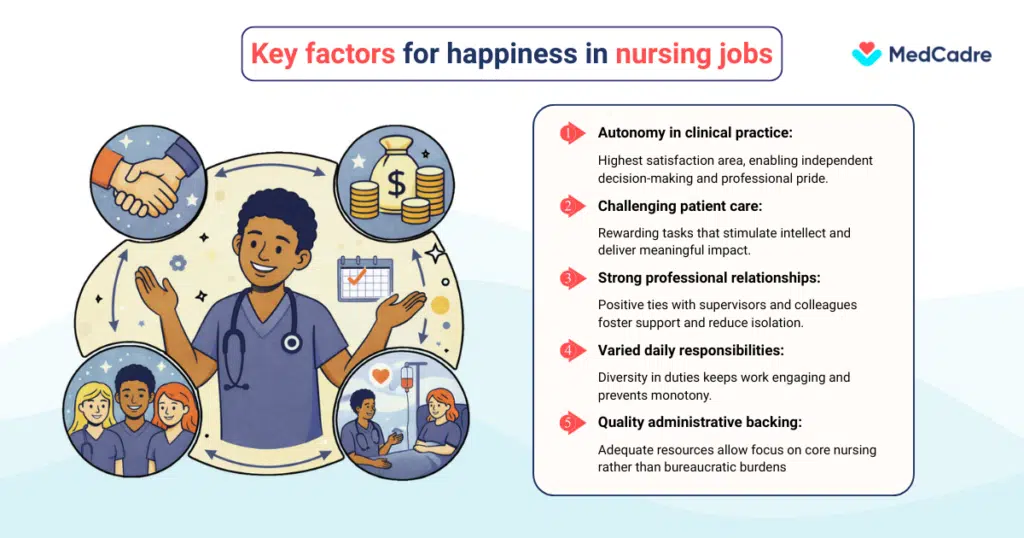
To give you a detailed understanding of the JD, an infographic has been added to make your recruiting process easy.
Top factors for happiness in nursing jobs
Strategy #3: Follow employee referral programs
Maintaining employee referral programs is among the most powerful among cost effective NP staffing trends for managing an adequate workforce. Whenever your facility needs to hire a new professional, it is advisable to check with your current staff’s networks for references.
It will help you access pre-vetted talent, which typically yields higher-quality candidates who may stay longer at your facility. To increase employee participation, you can offer incentives. This will encourage your staff to refer to certified talent.
Strategy # 4. Practice flexible stadding models
Recruiters must understand that there is a growing demand for flexible shift work in the healthcare sector. An increasing number of nurse practitioner work force is preferring variability in their work, which means there is a growing demand for rotational shifts and hybrid work models
We all know that nurse practitioner roles are considered part of the bedside workforce, so facilities traditionally do not offer much flexibility in shift timing, or they will not approve of working in a hybrid model.
Hospitals and recruiters can opt for rotational shift models if NPs are not maintaining critical patients. By this, you can meet a nurse’s desire for more flexibility.
Strategy # 5. Address burnout issues
Burnout in the healthcare sector is a complex issue. To overcome this issue, recruiters like you must maintain a process to identify burnout in advance so you can address it.
As a recruiter, you must prioritize the mental health and well-being of your staff. At the same time, encouraging leadership plays a vital role in reducing burnout and increasing retention.
You can burn out issues by following these steps:
Encouraging open communication: Ask your nurse practitioners what they say about issues at their workplace, and try to resolve them. This will help them complete their work more effectively.
Investing in professional development: Encourage your Nurse Practitioner workforce to expand their skill set through training and certification programs. Encouraging them with paid certifications will be an added advantage.
- Promoting work-life balance: Providing adequate paid leave or time off and flexible work schedules will help improve work-life balance among your employees.
- Rewarding with appreciation: Recognition and appreciation in the workplace motivate professionals and encourage them to keep up the good work in improving patient care.
Strategy #6: Offer competitive salary packages
Awarding your employees competitive salaries is a vital step in preventing clinic dropouts. Recruiters must understand that awarding competitive packages not only increases their chances of attracting experienced talent but also motivates professionals to stay longer with the facility.
This process helps hospitals to overcome nurse practitioner staffing issues.
Healthcare recruiting managers like you must know that awarding competitive wages also makes your facility an employer of choice in a competitive market and strengthens your overall workplace brand.
A healthcare clinic that offers a competitive and attractive salary has a better chance of overcoming workforce issues within its team.
For example, if you are planning to hire an experienced nurse practitioner for your facility, offering a market-trending salary is a better option.
As a hospital owner, it is your responsibility to stay up to date on the current pay structure across the country. To provide you with a clear understanding, a detailed infographic about salaries has been added.
Annual wage of nurse practitioners by state in the USA
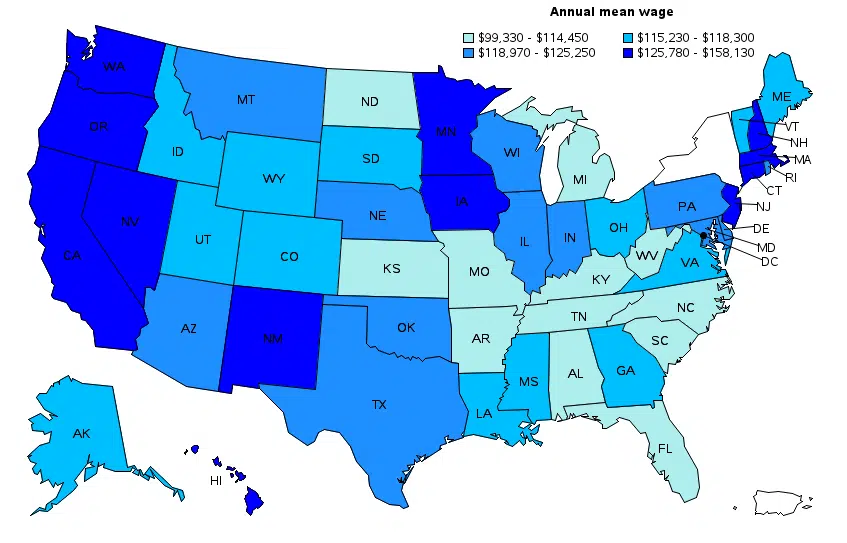
Source: BLS
Strategy # 7.Partner with educational institutions
Maintaining a partnership with an educational institution can help your facility to build a more skilled talent pool. These partnerships help you address nurse practitioner workforce shortages while keeping your recruiting budget under control.
Partnering with a modern platform for the nurse practitioner staffing workforce
Healthcare clinics facing nurse staffing gaps must plan and implement structured recruitment strategies to overcome workforce shortages and maintain operational stability.
A proactive and results-driven recruiting approach helps clinics reduce time-to-hire while maintaining high standards of patient care.
One such crucial strategy during staffing is to avoid partnering with traditional staffing agencies or free job portals.
It is better to avoid traditional agencies because most lack transparent pricing, offer limited employer control over candidate selection, and may increase overall recruiting costs.
On the other hand, free job portals may also present challenges, such as intense competition, unverified applicants, and delayed candidate responses.
So, to overcome these challenges, hospitals must partner with modern recruiting platforms such as MedSquirrels, which provide verified talent, streamlined processes, and clear visibility into workforce availability to address nurse practitioner staffing shortages.
Leveraging technology-driven platforms enables you to source, improve candidate matching, and reduce administrative burden. Partnering with MedSquirrels is one such bright option.
The platform supports clinics and hospitals with structured staffing solutions to attract both contract and full-time staff.
MedSquirrels offers multiple benefits, including meeting your recruiting needs. MedSquirrels offers three cost-efficient plans.
They are designed to meet your staffing needs, whether on a contract or full-time basis, or to comply with onboarding your self-sourced talent.
It also uses a flat-fee pricing model in which you pay only the resource’s monthly payroll cost and a flat hourly fee.
Recruiters can also book a free demo to see how the platform helps them make planned recruiting decisions. Professionals can also check open jobs and apply for those that match their skills.
FAQs
What are the most effective strategies to hire nurse practitioners faster?
Employers can improve hiring speed by creating clear job descriptions, strengthening employer branding, and using structured recruitment processes. Leveraging modern staffing platforms can also reduce delays and improve candidate matching.
How do nurse practitioner shortages affect healthcare operations?
Staffing gaps can lead to increased workload for existing teams, longer patient wait times, and reduced efficiency. In some cases, it may also affect the quality of care, patient satisfaction, and overall facility performance.
How does the nurse practitioner job growth impact staffing strategies?
Steady demand for nurse practitioners increases competition among healthcare employers for qualified talent. As demand rises, organizations need to adopt faster, more strategic hiring approaches to secure skilled professionals and maintain operational stability.
How can MedSquirrels help reduce staffing costs for healthcare clinics?
MedSquirrels offers a cost-efficient model with clear pricing, helping employers manage budgets more effectively. Reducing reliance on multiple intermediaries and improving hiring accuracy, it helps lower overall recruitment costs.
Can MedSquirrels support both contract and full-time recruiting needs?
Yes, MedSquirrels supports both contract and full-time staffing requirements. This flexibility allows healthcare facilities to adapt to changing workforce demands while maintaining continuity in patient care.

Jani Basha is a healthcare content expert at MedSquirrels, sharing insights on staffing trends, hiring best practices, and career growth.